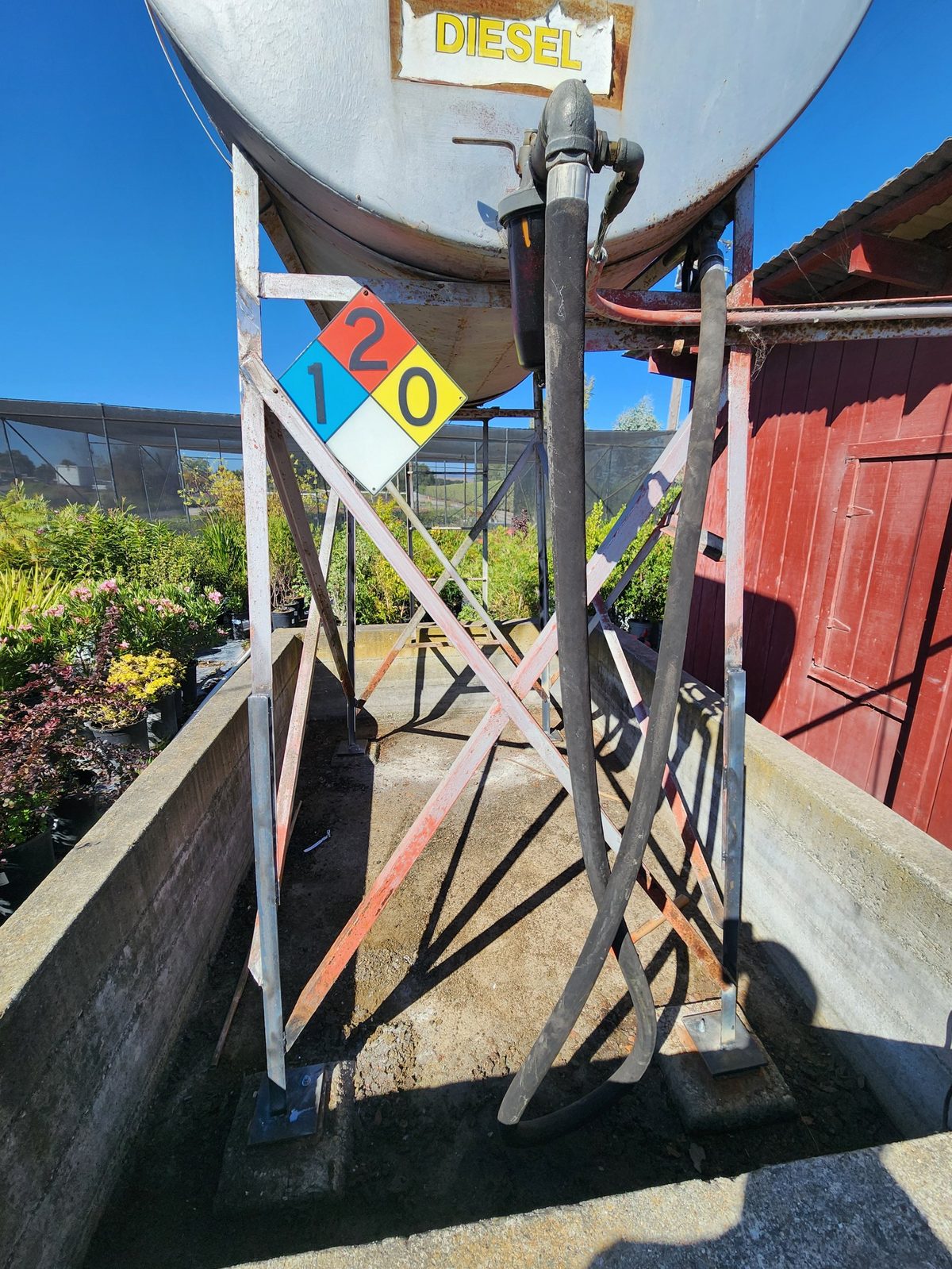
This one's a commercial welding repair — a structural fix on the steel stand holding up an elevated diesel tank at a wholesale plant nursery in Sonoma County. All four corner posts had rusted through at the base, right where they meet the concrete footing trough. Here's how a repair like this gets done without ever taking the tank off its stand.
Why This Structure Was Failing at the Base
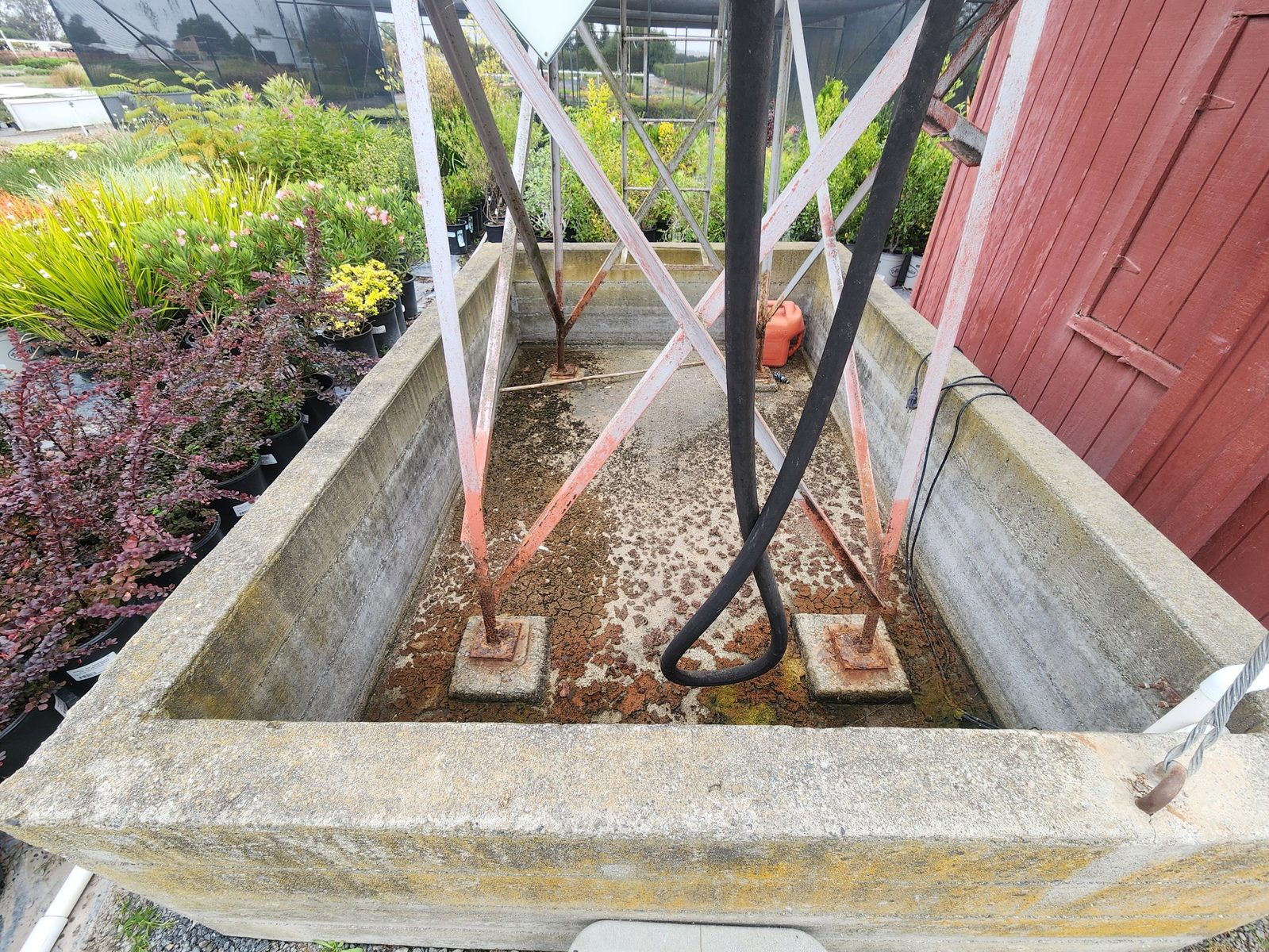
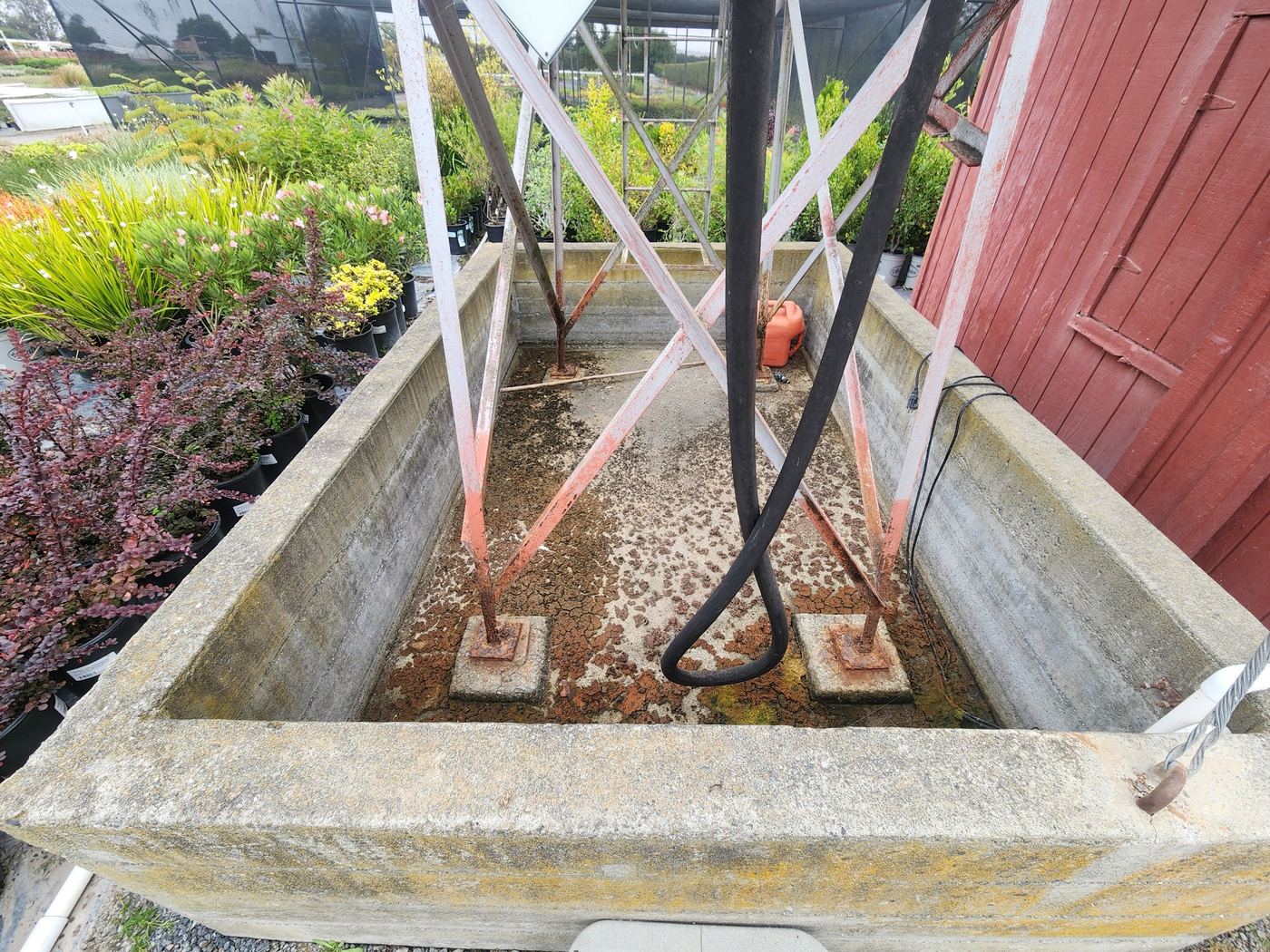
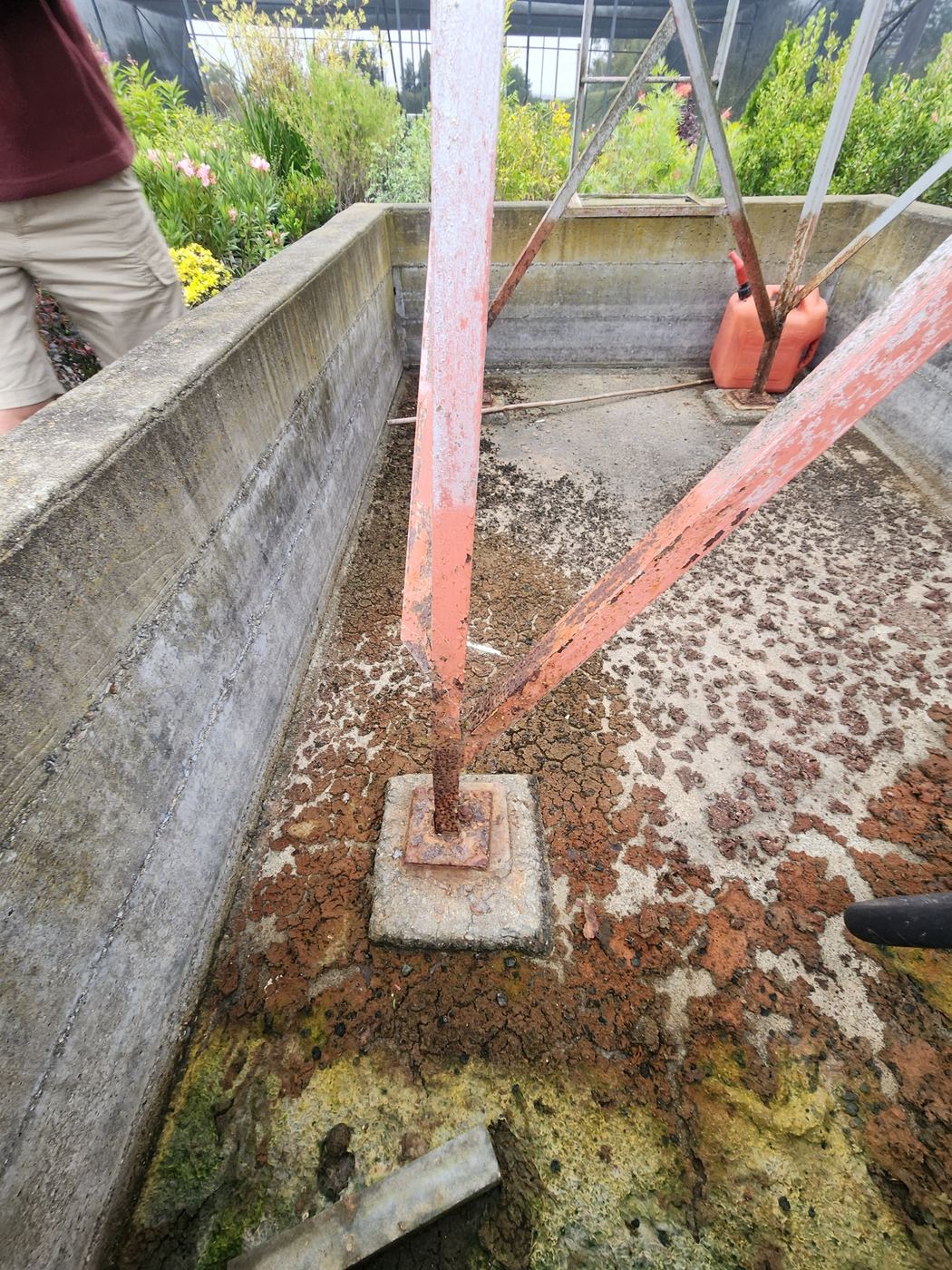
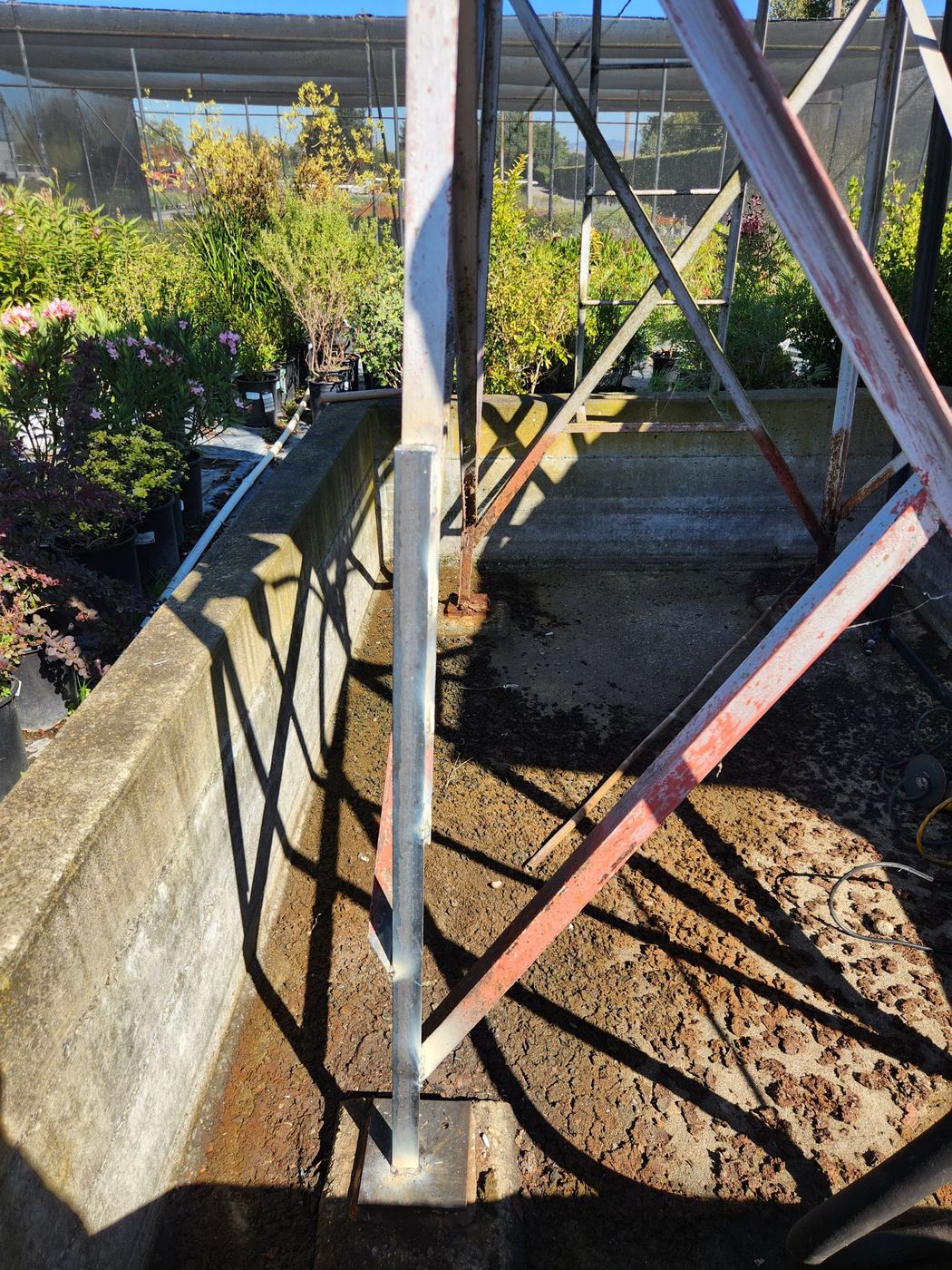
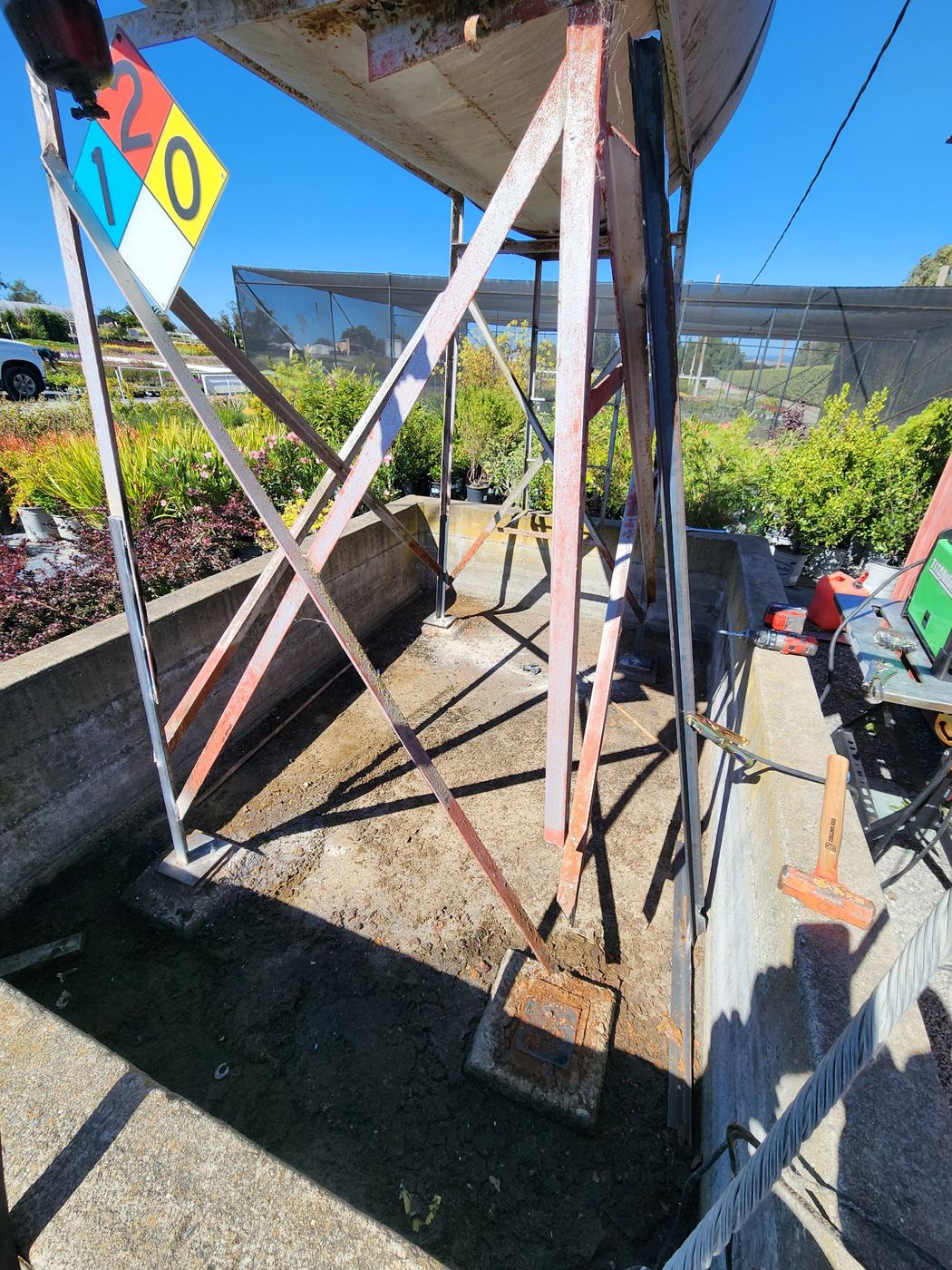
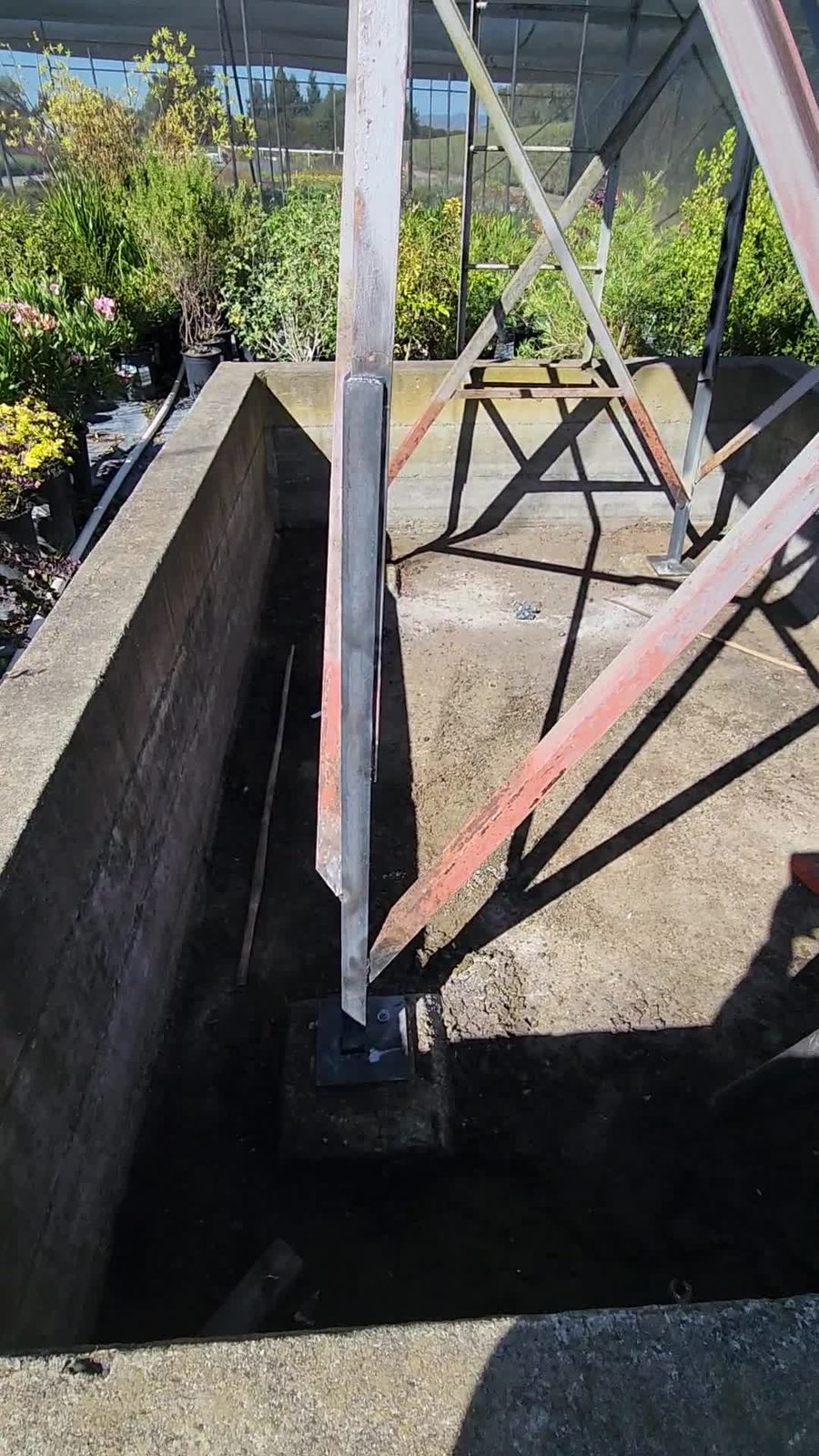
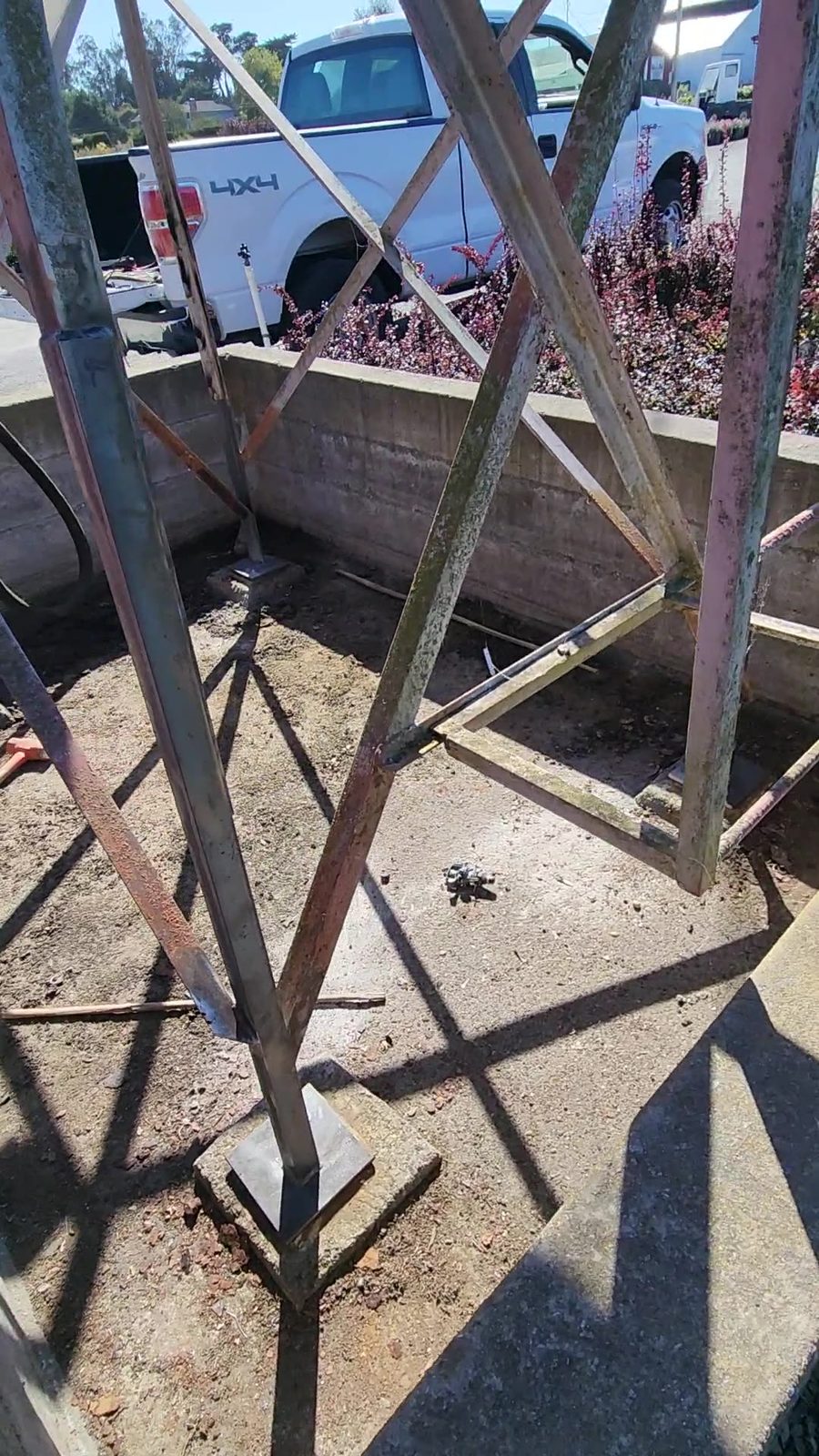
The tank sits on an X-braced steel frame, and the four corner posts — 1.5x1.5 inch angle iron — drop straight down into a concrete trough underneath. That trough is exactly where the problem started: it holds moisture and debris against the base of each post far longer than open air ever would, and years of that wet-dry cycle had eaten each post's base down to flaking, pitted rust. The bracing and the upper frame were still solid — this was a base-of-post failure, not a structure-wide one.
A tank stand isn't something you get to take offline for a week. The tank stays full, the fuel line stays connected, and the fix has to happen with the structure still standing and still carrying weight the whole time.
How the Repair Went — Step by Step
Inspect the stand and diagnose the corrosion
Each of the four corner posts was checked at the base where it meets the concrete trough — the spot where rust consistently starts on a structure like this. All four had failed at roughly the same point, confirming this was a design and moisture issue, not a one-off.
Prop and support the tank before cutting anything
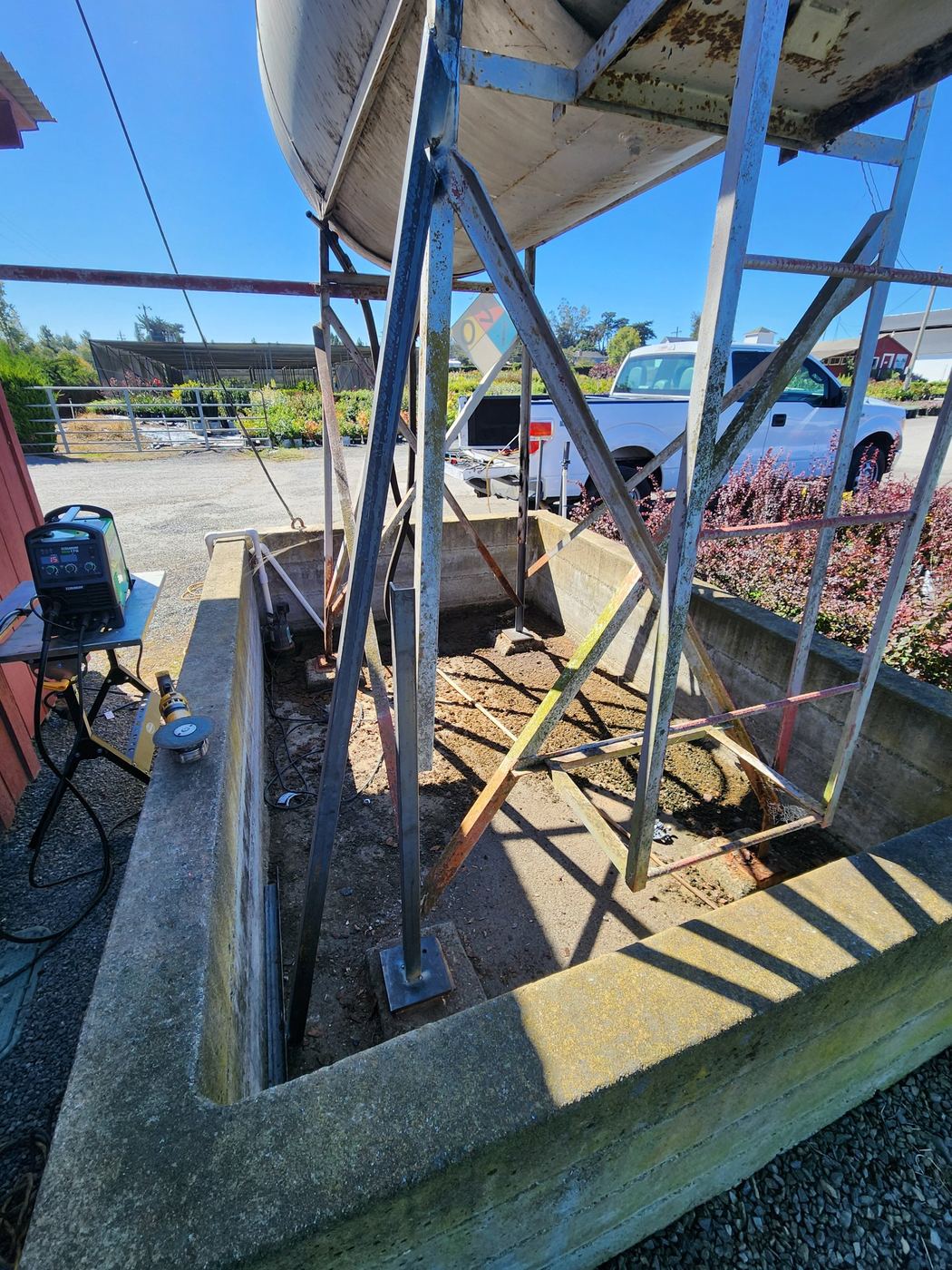
With the tank staying in place and full, temporary propping went in under the frame before any post was touched, so the load never depended on a single corner while work was underway.
Cut out the first rotted post
About four feet of rusted angle iron was cut away at the first corner, back to solid, unaffected steel. The other three posts and the cross bracing carried the load while that corner sat open.
Fabricate and weld the new base plate and post
A new section of matching 1.5x1.5 inch angle iron was welded to a new 3/8 inch thick, 6x6 inch steel base plate — thicker than the original mounting point on purpose, since that's exactly where the rust started the first time. The plate was drilled and anchored into the footing before the post above it was fully welded in.
Repeat corner by corner, and re-weld the cross bracing
The same sequence ran on each remaining corner, one at a time, so the stand always had at least three solid legs under it. Once all four were done, the diagonal cross bracing connecting them got re-welded and checked for tightness.
Grind clean and haul the old steel
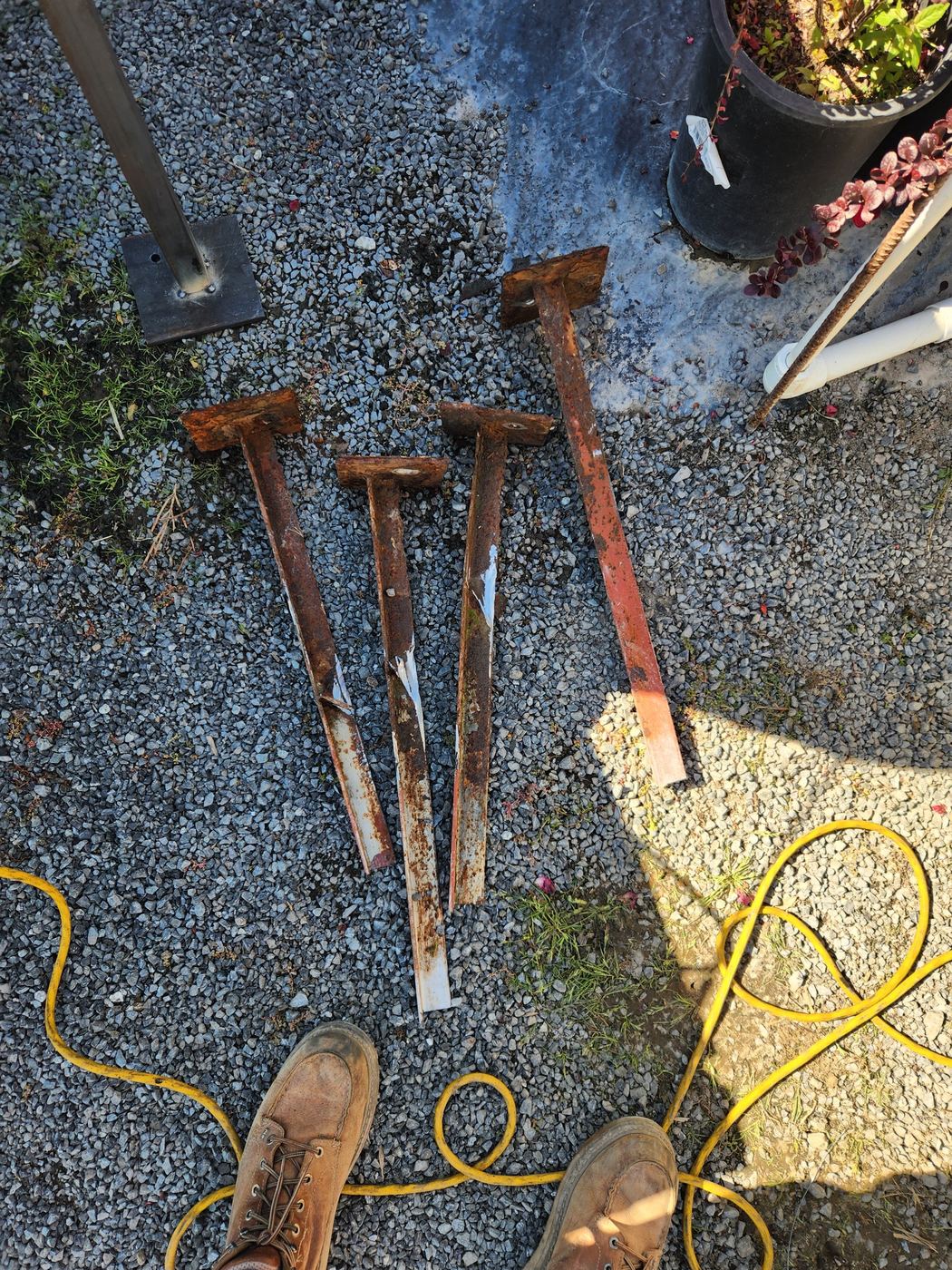
Welds got ground smooth, the repaired stand was checked for level and solid footing under load, and the four rusted-out post stubs were hauled off as scrap.
What Structural Steel Repair Like This Costs
Pricing depends on how many posts need replacing, footing condition, and access, but here's a realistic range for this kind of repair in Sonoma County in 2026:
| Job | Typical Range |
|---|---|
| Single corner post repair (cut, new steel, welded base plate) | $250–$400 |
| Full four-corner structural repair (this job) | $900–$1,500 |
| Cross-bracing re-weld or reinforcement only | $150–$350 |
If footing damage turns up once a post is opened up — cracked or undersized concrete, missing anchor bolts — that's quoted separately once it's visible, rather than folded into the original estimate sight unseen.
Frequently Asked Questions
Why do steel support posts rust out at the base first?
The base of a support post is where water, dirt, and debris collect and stay wet the longest — especially when the post sits in a concrete trough or footing that holds moisture against the steel. That constant wet-dry cycle is what eats through angle iron and tube steel from the ground up, even when the rest of the structure looks fine.
Can you repair just the bottom of a post instead of replacing the whole thing?
Yes, in most cases. If the rot or rust is limited to the bottom few feet of a post, the damaged section can be cut out and a new piece welded in with a fresh base plate, rather than fabricating and replacing the entire post. This is faster and cheaper than a full rebuild as long as the rest of the post is still structurally sound.
How do you keep a tank or structure supported while cutting out a post?
Only one corner post is cut and replaced at a time. The other posts and the cross bracing carry the load while that corner is open, and temporary propping is used underneath as extra insurance during the cut and weld. Once that corner's new post and base plate are welded solid, work moves to the next corner.
What size steel is used to repair a structural post like this?
This job matched the original 1.5x1.5 inch angle iron and welded each new post section to a new 3/8 inch thick, 6x6 inch steel base plate — thicker than the original mounting point, since that's exactly where the rust started the first time.
How much does structural steel repair cost in Sonoma County?
A single corner post repair (cut, new steel, welded base plate) typically runs $250–$400. A full four-corner repair like the one in this project, including material, footing prep, and cross-bracing re-welds, runs $900–$1,500 depending on access and how much of the structure needs to come apart to work safely.
The Bottom Line
Rusted-through support posts on a tank stand, equipment frame, or similar structure are a safety issue, not a cosmetic one — but they don't always mean rebuilding the whole thing. Cutting out the damaged section, welding in new steel with a proper base plate, and doing it one corner at a time is usually enough to make a stand like this solid for years again.