Some jobs are about making a space look better. This one was about making it work harder. A Saratoga office asked Build & Fortify to pull old carpet out of a large multi-purpose room and lay down 8mm black rubber flooring in its place — the kind of surface built for gym-level traffic, not just foot traffic to a desk. It's outside our usual Sonoma County service area, but commercial flooring work like this is exactly the kind of job we'll travel for.
A Room That Wasn't a Simple Rectangle
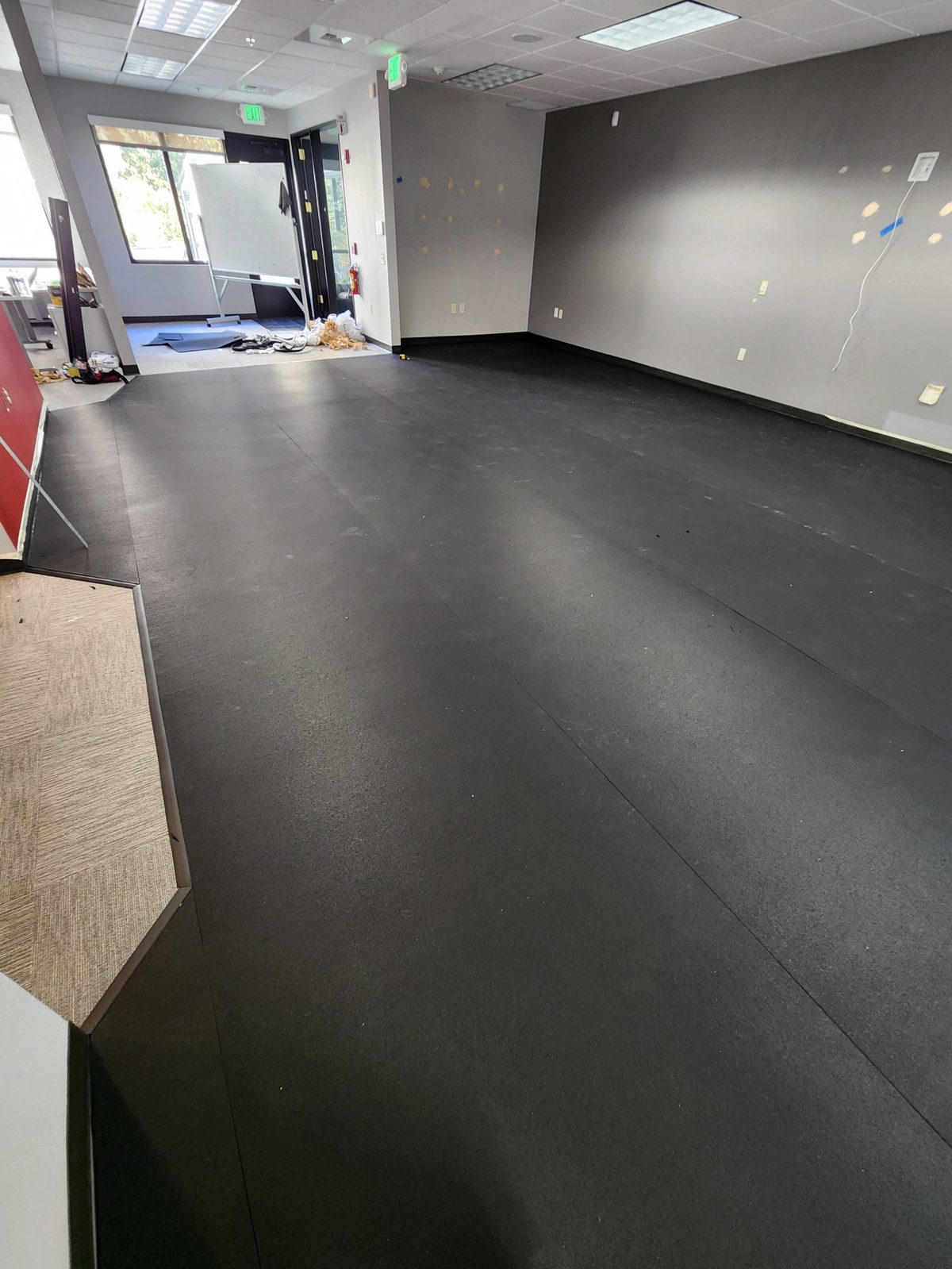
The room had stepped walls, a slightly angled far wall, and tight tie-ins at a hallway opening and an exit. That meant every roll had to be scribed and cut to fit the actual wall line, not just rolled out and taped down. Six rolls of 8mm black rubber flooring, each 4 feet by 35 feet, went across the main room — enough material that cutting it wrong would have been an expensive mistake.
How the Install Went — Step by Step
Clear and prep the room
Old carpet came out of the main room first, clearing the subfloor so the new rubber had a clean, flat surface to go down on.
Roll out and dry-fit each roll
Six rolls of 4 ft x 35 ft, 8mm black rubber flooring were rolled out and positioned before any cutting started, so the full layout was mapped out against the room's actual shape.
Scribe and cut to the walls
Every roll got scribed and cut to the stepped walls and the angled far wall — no factory edge in this room was a straight shot. A sharp utility blade run in multiple shallow passes, with blades swapped often, kept each cut clean against the irregular lines.
Tape every seam and the perimeter
Each seam got taped from underneath before the rolls went down, then butted tight so there's no gap for dirt or moisture to work into. Double-sided tape ran under the full perimeter too.
Install edge ramps at the transitions
The hallway opening and the exit side both got edge ramps, taped flush to the floor, so there's a smooth step down from the rubber to the carpet rather than a lip someone could catch a foot on.
Walk every seam and edge
A full walk of the finished room checked every seam and edge before calling the job done — nothing left to flag on a punch list.
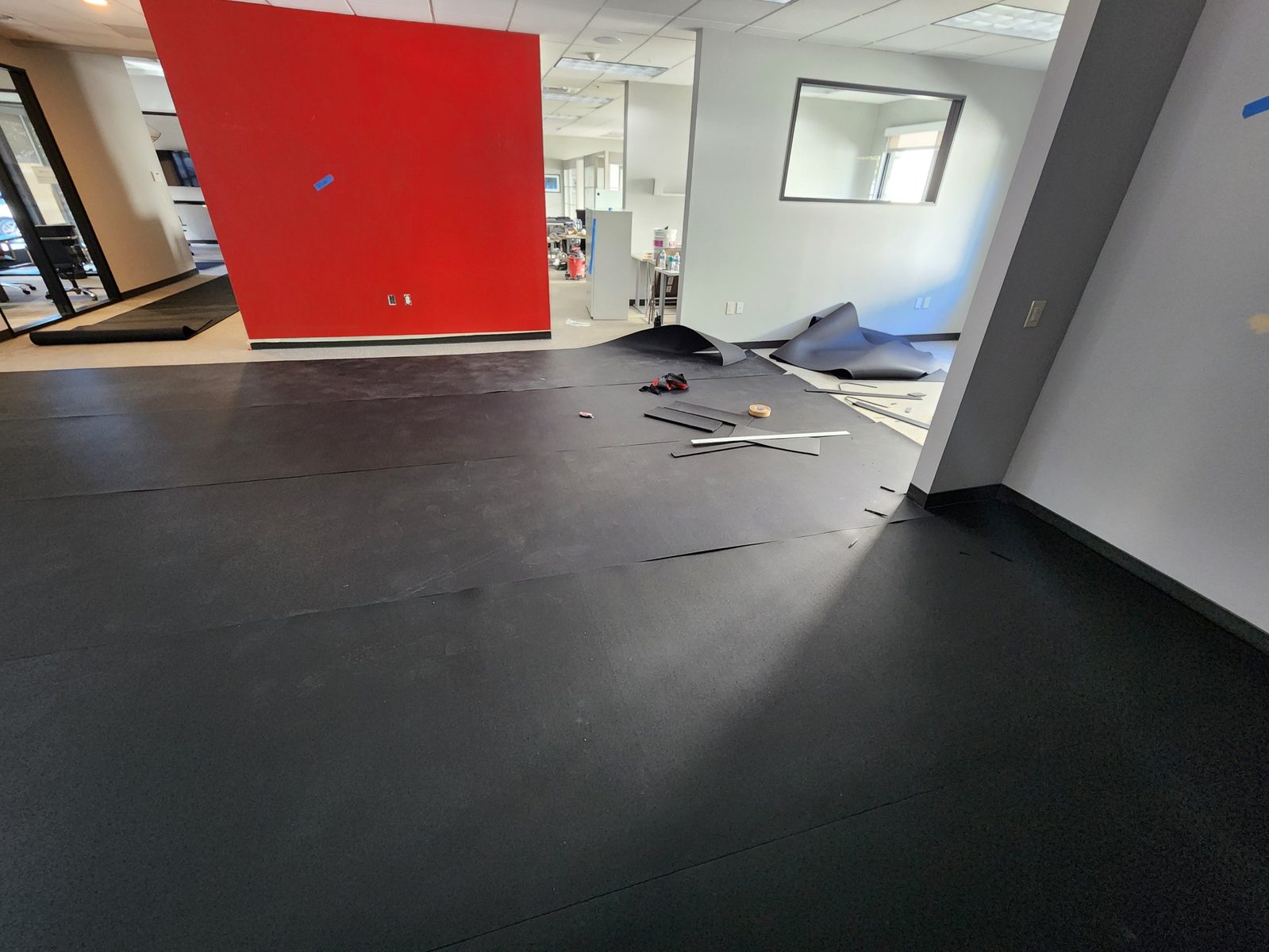
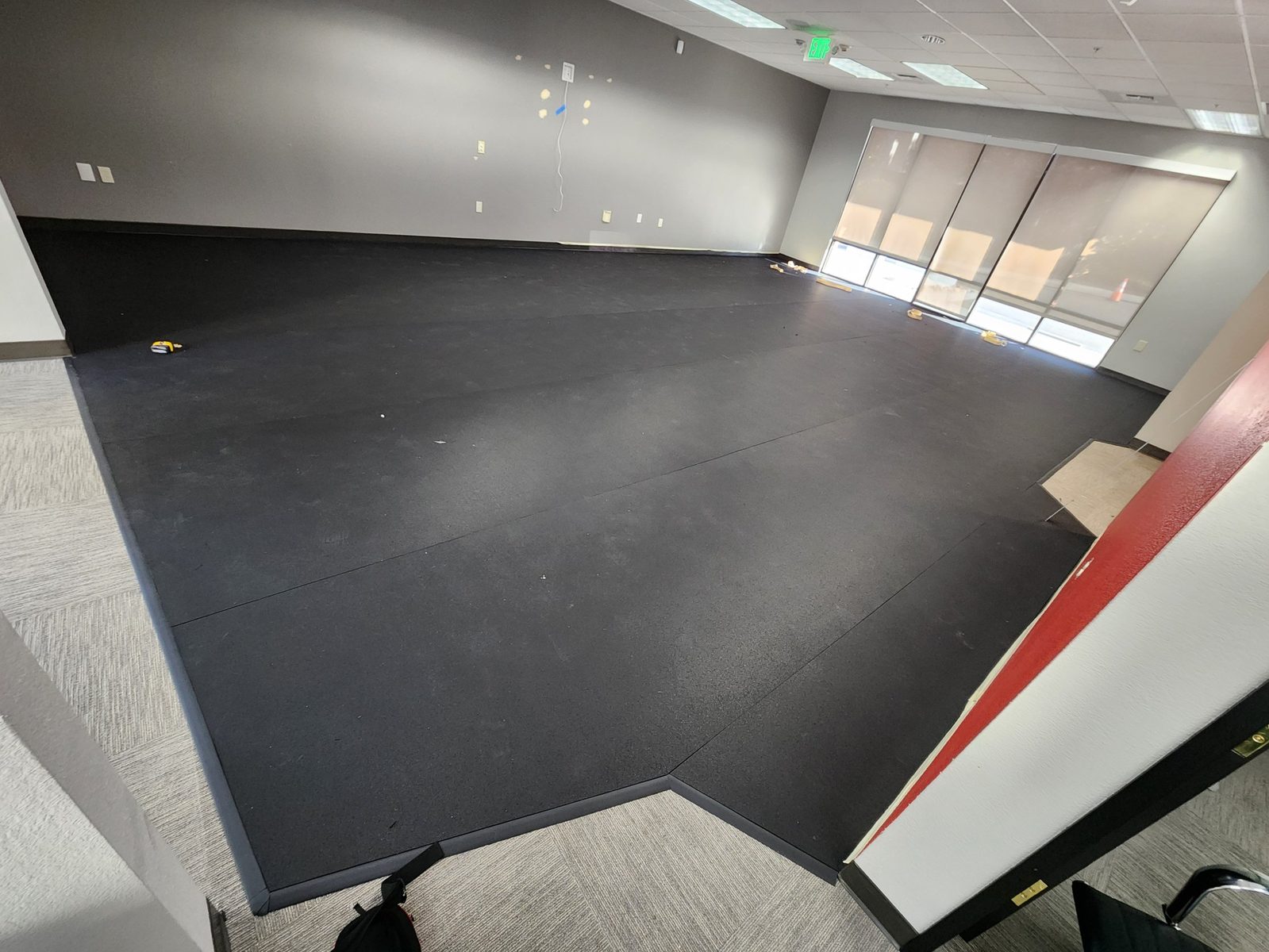
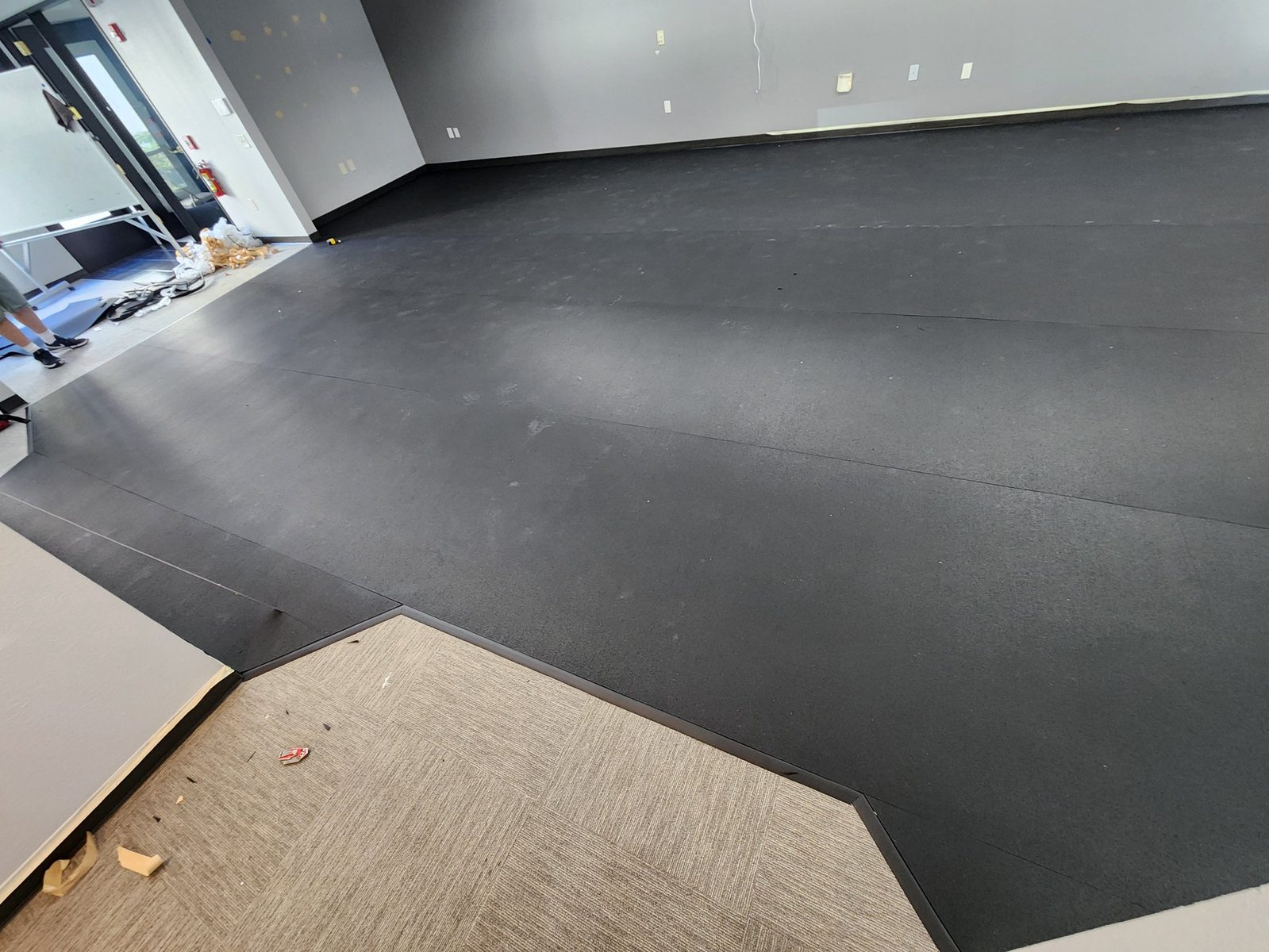
The whole main room was completed in a single day, cutting and installing solo with a helper on hand just to move and position the heavy rolls. Done right, the seams disappear and the transitions feel like part of the original build, not an add-on.
What Commercial Rubber Flooring Like This Costs
Pricing depends on square footage, how much of the room needs custom cutting, and whether the job fits in one visit or has to be split across trips:
| Job | Typical Range |
|---|---|
| Single room install, rolls staged and ready (this job's main room) | $1,500–$2,200 |
| Smaller return-trip room (e.g. a conference room) | $400–$800 |
| Tear-out of old carpet or flooring, per room | $200–$500 |
A room with simple rectangular walls and no furniture to work around installs faster than one with angled walls, tight tie-ins, or a full office still furnished — that's quoted once the layout and access are seen.
Frequently Asked Questions
What's the advantage of rubber flooring over carpet in a commercial space?
Rubber flooring at 8mm or thicker holds up to rolling equipment, dropped weights, and constant foot traffic in a way carpet simply can't. It also cleans up in minutes with a mop instead of needing a shampoo or replacement every few years, which makes it a common upgrade for gyms, shop floors, and other high-traffic commercial rooms.
How long does a commercial rubber flooring installation take?
A single room with pre-staged rolls can often be cut, seamed, and installed in a single day. Larger jobs or rooms that need to be split across multiple visits — because of furniture, scheduling, or square footage — take longer and are usually quoted as separate trips.
Can rubber flooring be installed in a room with angled or irregular walls?
Yes. Every roll gets scribed and cut to match the actual wall line rather than rolled out and taped as-is. Stepped walls, angled walls, and tight tie-ins at doorways just mean more careful cutting — multiple shallow passes with a sharp blade, swapping blades often to keep the edge from wandering.
Is there a trip hazard where rubber flooring meets carpet or another surface?
Not when it's installed right. Edge ramp transition strips get taped flush to the floor at every doorway or flooring change, so there's a smooth, gradual step down instead of a raised lip someone could catch a foot on.
How much does commercial rubber flooring installation cost?
A single room install with rolls staged and ready typically runs $1,500–$2,200 depending on square footage and how much cutting the walls require. A smaller return-trip room, like a conference room on a separate visit, usually runs $400–$800.
The Bottom Line
Rubber flooring this thick doesn't forgive a rushed cut, and a room with stepped or angled walls doesn't forgive a sloppy layout. Done right — every seam taped from underneath, every edge scribed to the actual wall, every transition ramped flush — it holds up to years of commercial-grade abuse and looks like it was built into the room from day one.