This one's a project spotlight instead of a general guide. Two custom gates, built from scratch out of square steel tubing and welded on-site for a hillside property here in Santa Rosa. Here's how a job like this actually goes together, from measuring the opening to hanging the finished gate.
Why This Job Called for a Welded Gate, Not a Prefab One
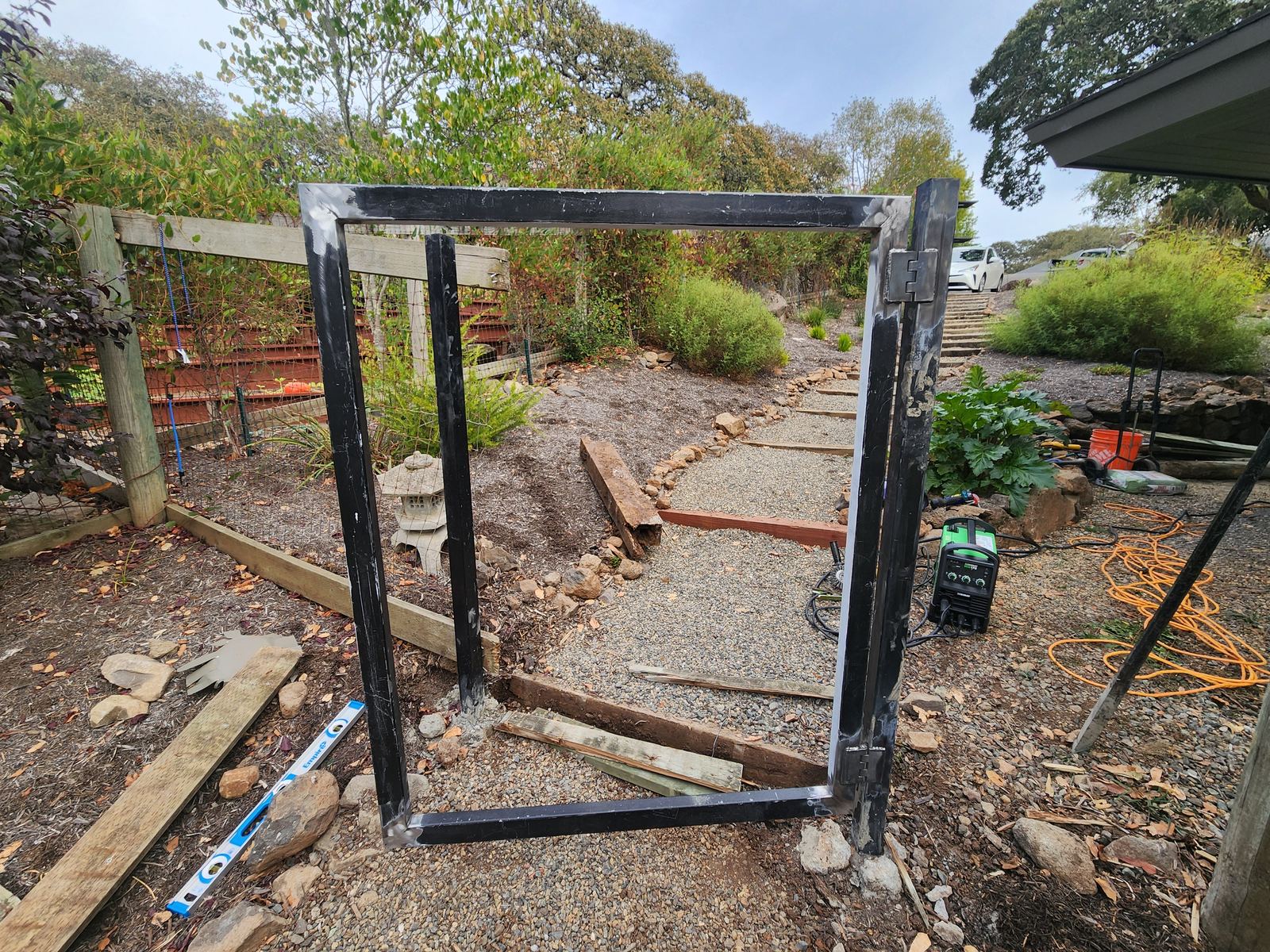
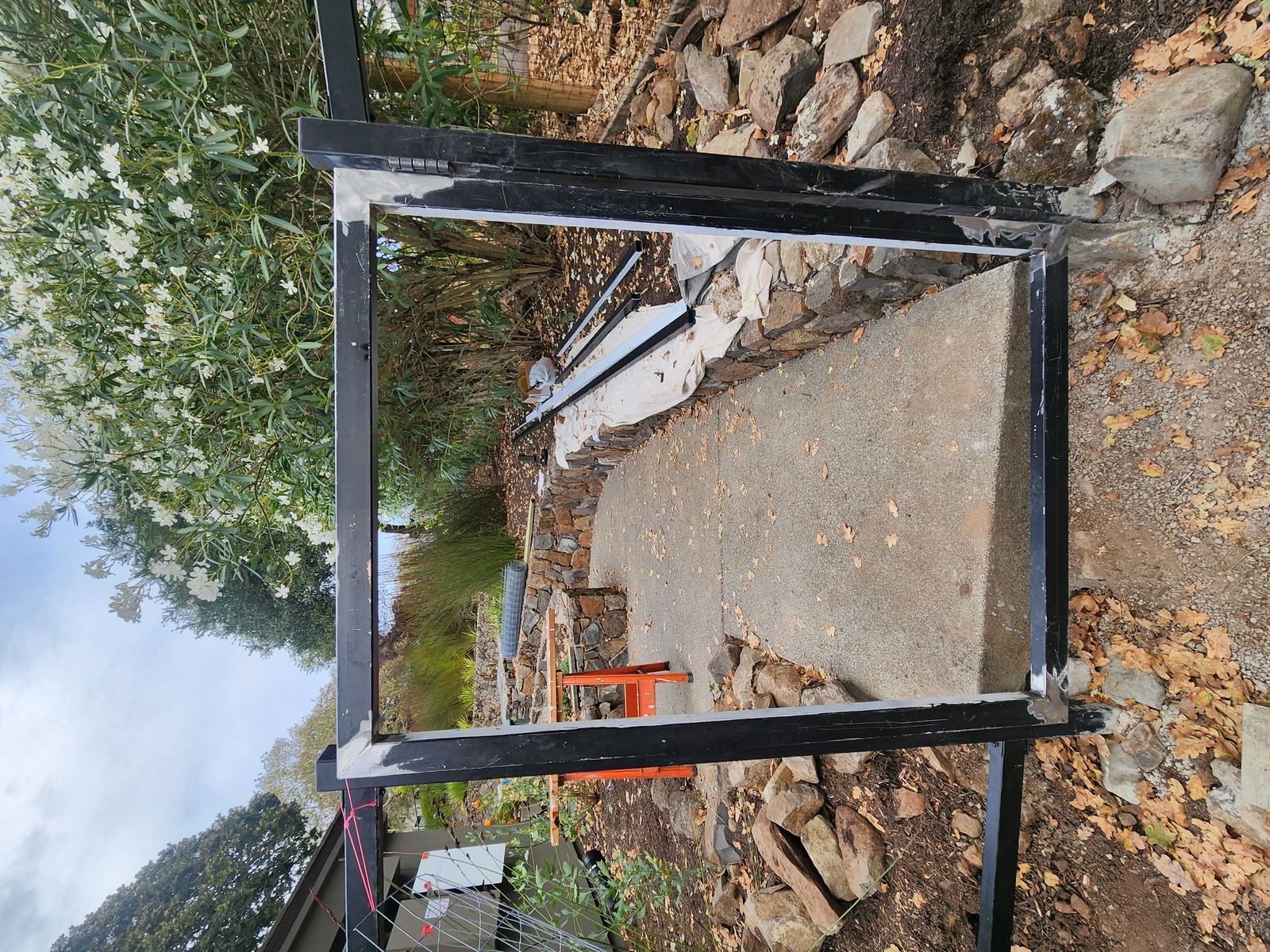
This property sits on a slope with a stacked-stone retaining wall running along the path, a mature oak overhead, and openings that don't match any off-the-shelf gate size. A prefab gate kit assumes a square opening on flat ground — neither of which applied here. Building the frame from raw square tubing meant every cut and every corner could be sized to the actual opening instead of forcing a standard size to fit.
It also meant the frame could be built strong where it actually needed strength — square tubing gives a clean, boxy profile that resists twisting far better than the thinner angle iron or tube stock used in a lot of big-box gate kits.
How the Build Went — Step by Step
Measure the opening
Both openings were measured at the top, middle, and bottom — hillside fence lines are rarely perfectly square, so the frame dimensions get set to the actual opening, not an assumed rectangle.
Cut the tubing to size
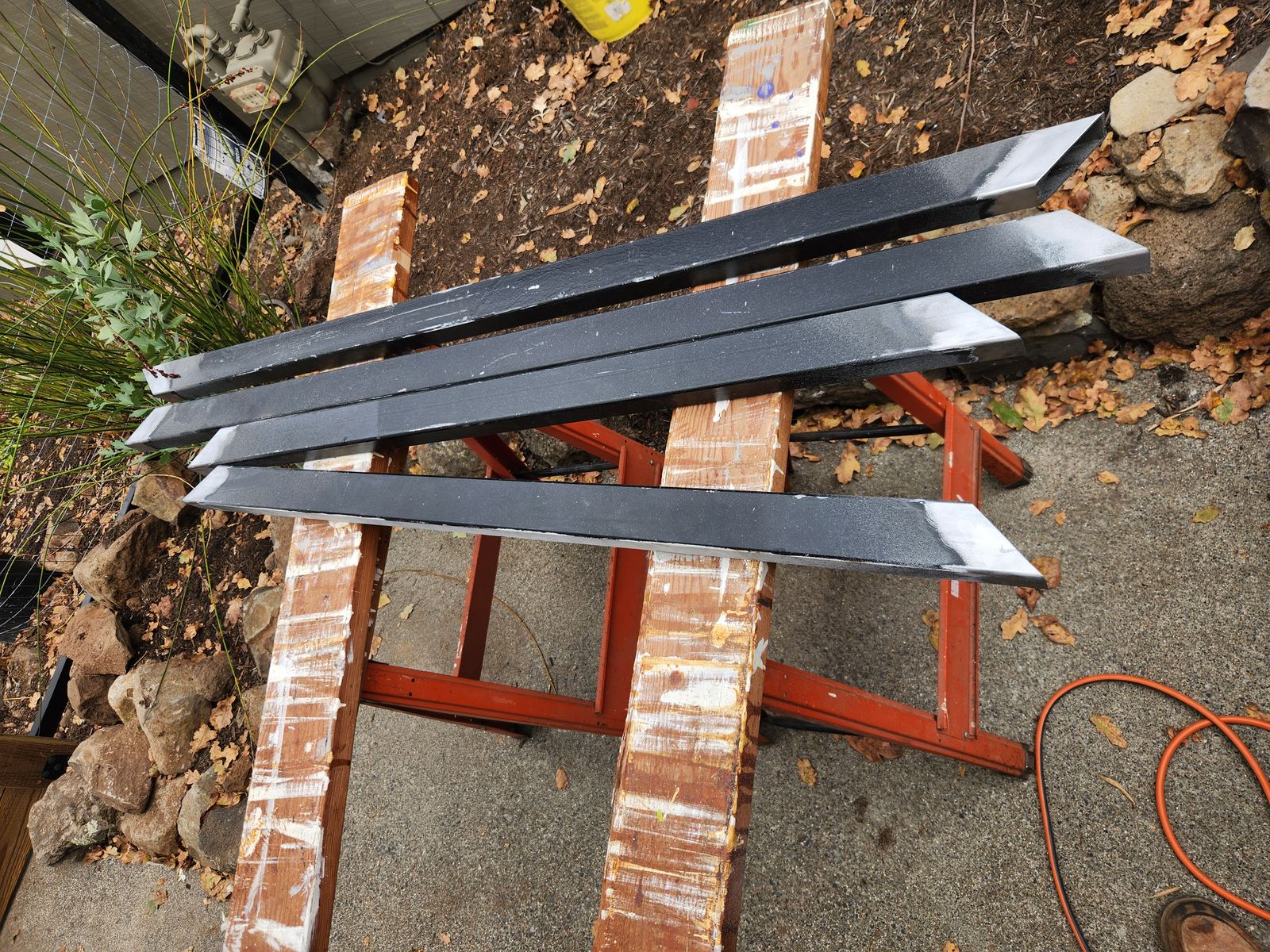
Square steel tubing was cut to length for the top, bottom, and side rails of each frame, with corners squared up before anything gets tacked.
Tack weld and check square
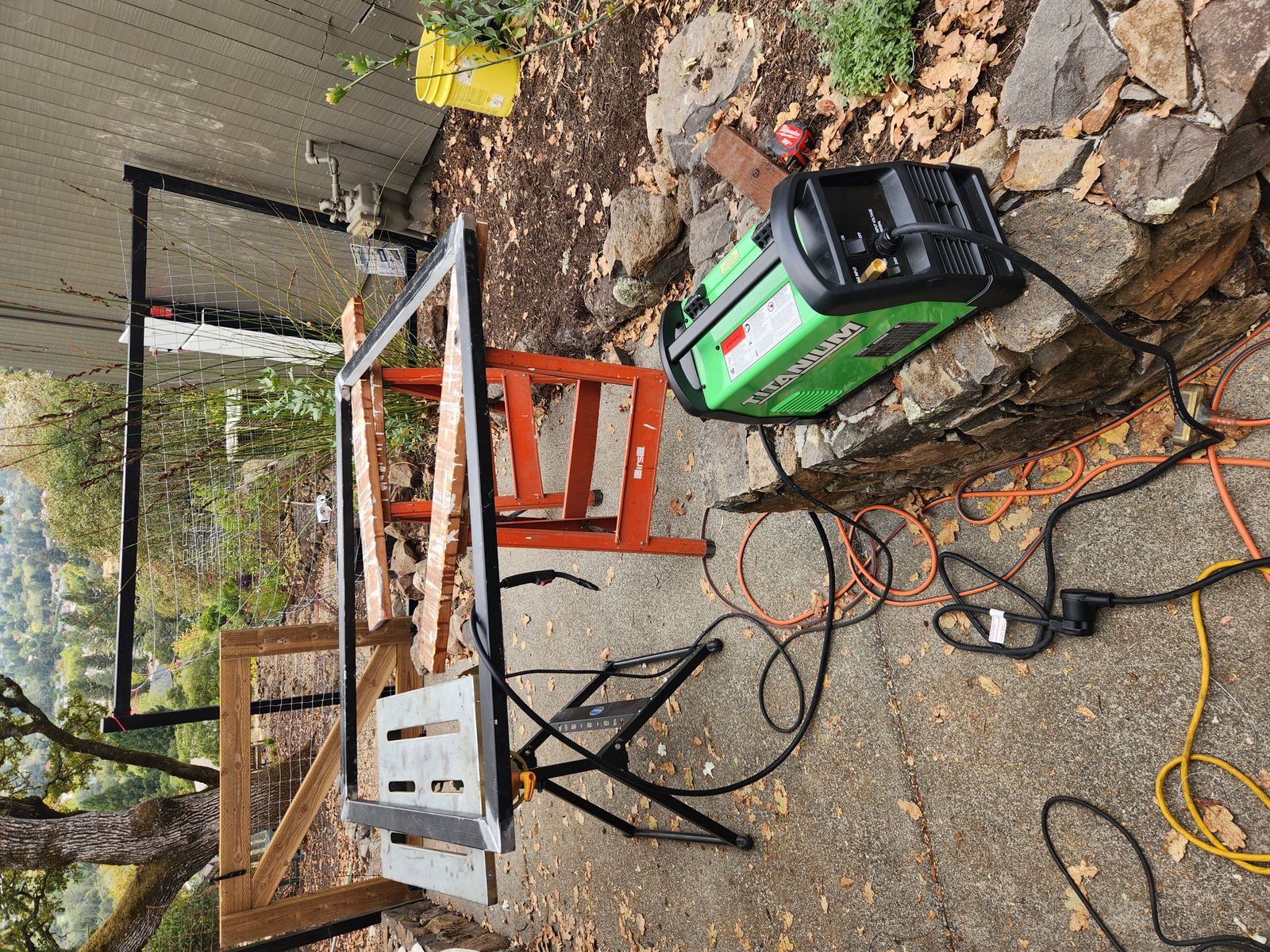
Each frame gets tack-welded at the corners first, then checked with a square and level before committing to full welds. This is the step that determines whether the gate hangs straight later — skip it and the whole gate racks over time.
Full weld the corners and hinge points
Once the frame is confirmed square, the corners get fully welded, along with the hinge plates — these carry the entire weight of the gate, so they get the most weld coverage, not just a couple of tacks.
Grind and clean the welds
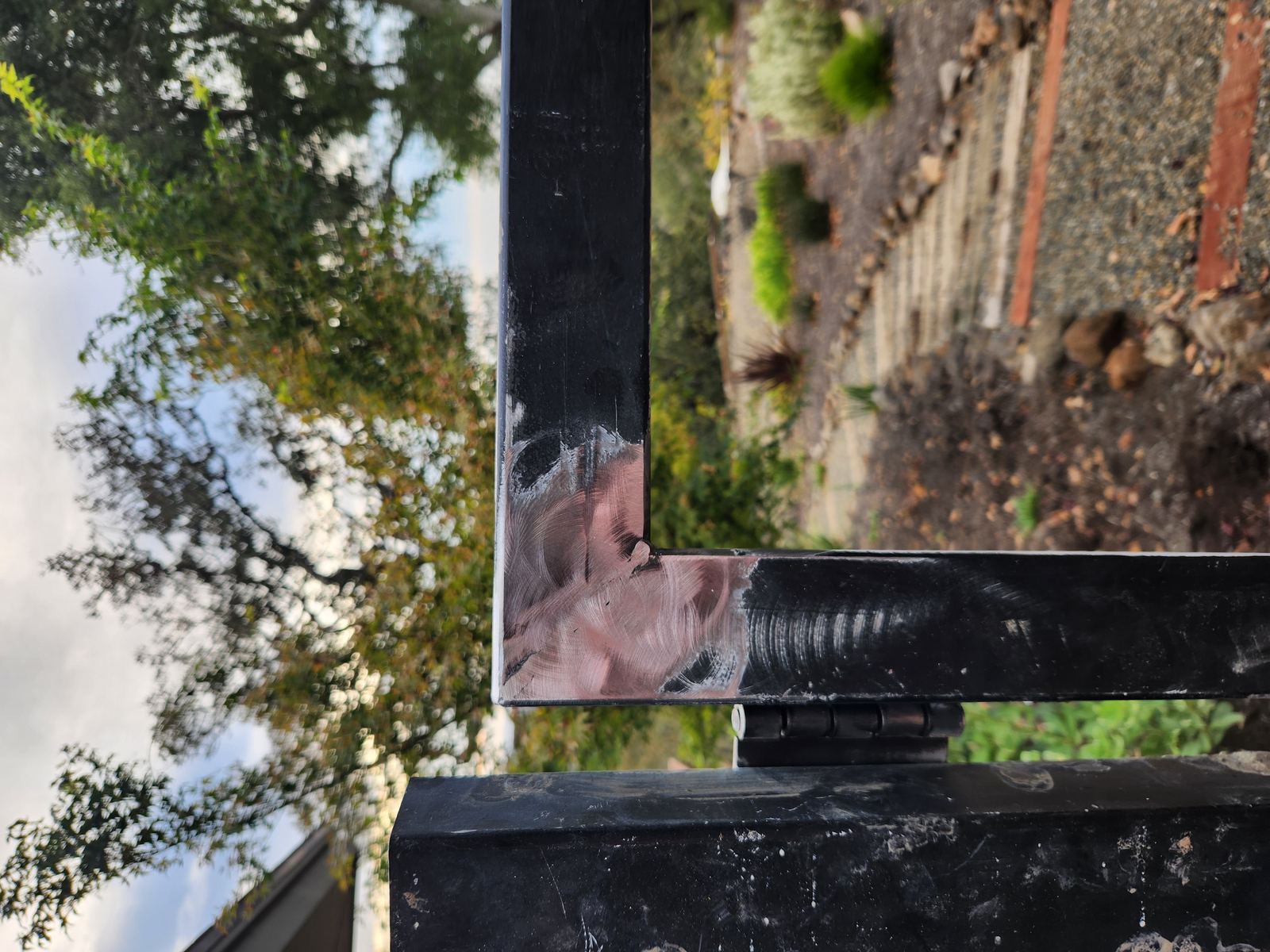
Weld beads get ground smooth on the visible faces and corners so the finished gate has clean lines instead of raw weld bead showing everywhere.
Prime, paint, and hang
Bare steel gets primed and painted before it goes up — this is what actually keeps a mild-steel gate from rusting out at the welds within a couple of Sonoma County winters. Once painted, the frame is hung on its welded hinges and adjusted until it swings clean.
Square Tubing vs. Angle Iron vs. Prefab Kits
| Option | Best for | Trade-off |
|---|---|---|
| Welded square tubing (this job) | Non-standard openings, sloped sites, max rigidity | Costs more than a kit; requires on-site fabrication time |
| Angle iron frame | Lighter garden gates, budget builds | Twists more over time under hinge load |
| Prefab gate kit | Standard square openings on flat ground | Doesn't fit non-standard widths or sloped sites without modification |
What a Custom Welded Gate Costs
Pricing depends on size, tubing gauge, and finish, but here's a realistic range for a fully fabricated gate in Sonoma County in 2026:
| Job | Typical Range |
|---|---|
| Custom gate fabrication (frame welded from tubing, primed, installed) | $450–$900 |
| Existing gate repair or realignment | $180–$450 |
| Hinge or latch replacement only | $100–$250 |
A repair is almost always cheaper than a full custom build — if your existing gate just sags or won't latch, that's worth checking before paying for a new fabricated frame. See the gate welding & repair page for repair-specific pricing.
"Chad did an excellent job. He repaired my fence lines, added privacy lattice, welded and repaired a gazebo frame, reinforced sections of the fence, and repaired a plumbing leak."
Frequently Asked Questions
Why weld a custom gate instead of buying a prefab gate?
Prefab gates are built to standard rectangular openings and flat ground. Hillside properties, uneven fence lines, and non-standard widths usually don't match a stock size. A welded steel-tubing frame is built to the exact opening, squared and braced on-site, so it fits and swings correctly without shimming or trimming.
What size steel tubing is used for a gate frame?
Most residential gate frames use 1x1 or 1.5x1.5 inch square steel tubing for the perimeter, depending on the gate's size and how much weight the hinges need to carry. Larger driveway gates may step up to 2x2 inch tubing for added rigidity.
How long does it take to build and install a custom steel gate?
A single gate frame — cutting tubing to size, squaring, tack welding, final welding, grinding, and priming — typically takes one on-site day. Painting and final hardware installation can add a second visit if a cure time is needed between coats.
Can you match a custom gate to my existing fence?
Yes. Chad matches the gate's height, post spacing, and finish (color, wire mesh infill, wood insert, or solid panel) to the existing fence line so the new gate blends in rather than standing out.
The Bottom Line
Not every gate job needs a full custom build — plenty of sagging or misaligned gates just need a repair. But when the opening is non-standard, the site is sloped, or a prefab kit simply won't fit, a welded steel-tubing frame built on-site is the fix that actually lasts.