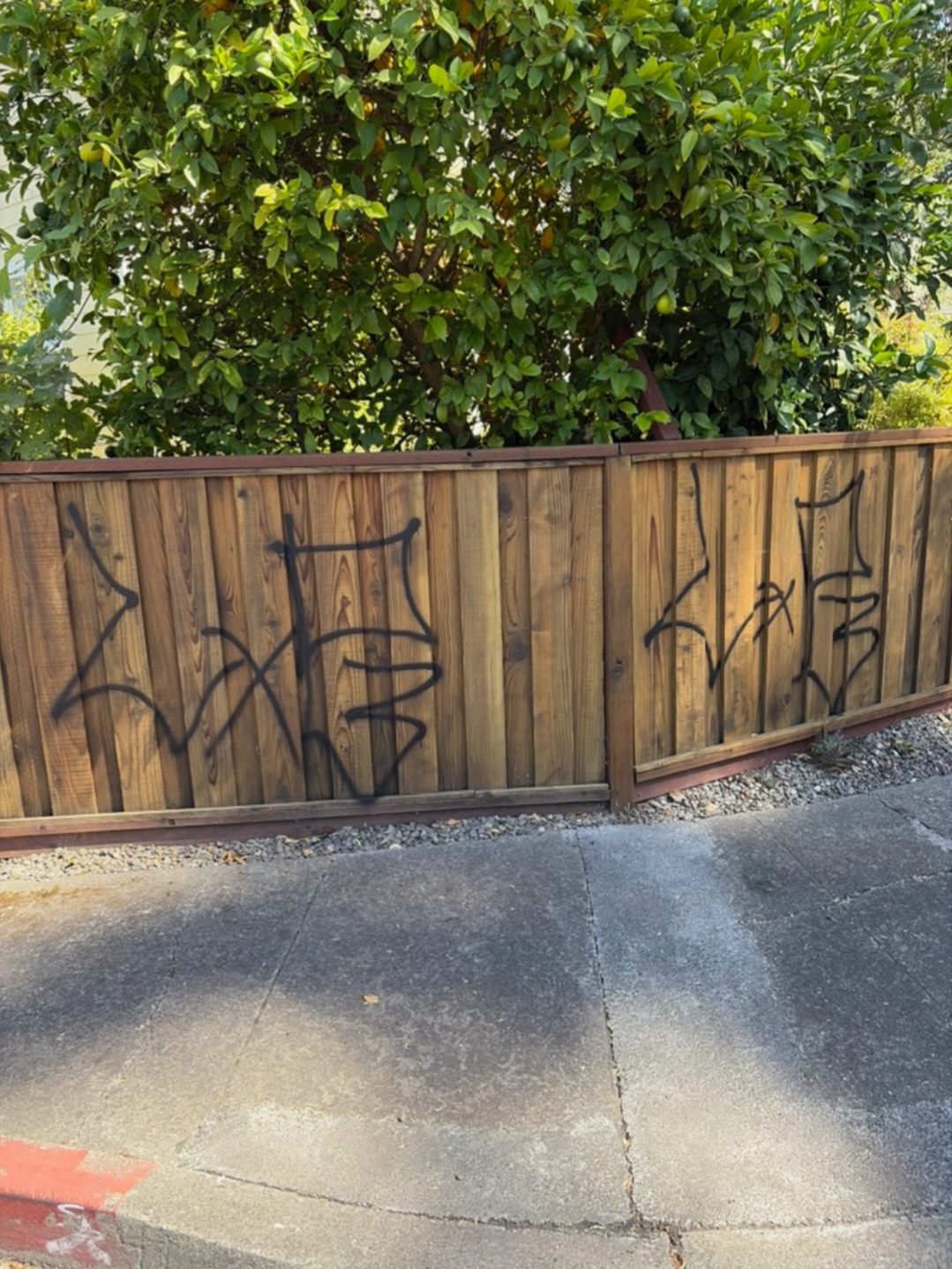
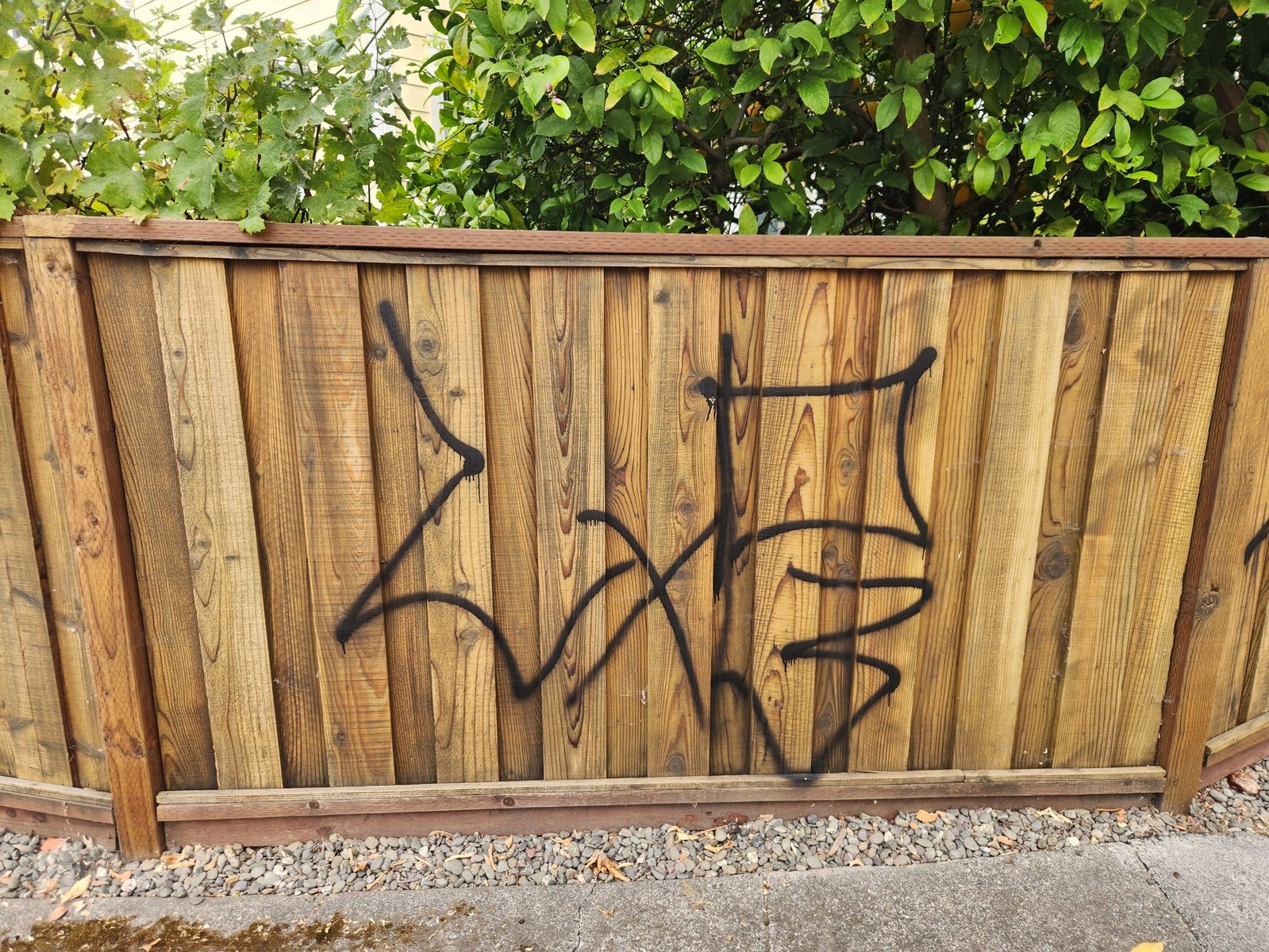
A wood fence along a Santa Rosa driveway got hit with spray-paint tags, right at eye level on two of the street-facing panels. The instinct after a graffiti hit is usually to assume the damaged boards need to be torn out and replaced — this job is a good example of why that's rarely the first move. Sanded, spot-stained, and blended back into the surrounding wood, the whole fix was done in a single visit with no new lumber standing out against the old.
Why Sand-and-Restain Beat Tearing Out the Panels
Spray paint sits on the surface of wood grain rather than soaking all the way through. Sanding it out and matching the stain color to the surrounding, already-weathered boards restores the look for a fraction of what new fencing would cost — and it avoids the obvious mismatch of fresh lumber standing next to sun-faded panels. Replacement only makes sense when the wood underneath is already rotted, warped, or the paint has soaked deep into unsealed, heavily weathered wood that won't sand clean. Neither applied here, so a rebuild wasn't on the table.
How the Job Went — Step by Step
Assess the tagged panels
Both tagged sections were checked for how deep the paint had soaked in and whether the wood underneath was sound — the deciding factor for sand-and-restain versus replacement.
Sand the paint out of the grain
The tagged boards were sanded down to lift the spray paint out of the surface without over-thinning the wood.
Stage the stain and supplies
Stain, brushes, and a roller tray were set up on-site, matched against the surrounding fence color before any product went on the wood.
Apply the stain coat
The matching stain went on over the sanded sections — this is the stage where the old tag still ghosts through briefly under the wet coat before it cures and blends.
Let it cure and check the blend
Once dry, the repaired boards were checked against the rest of the fence in daylight to confirm the color matched the weathering on the untouched panels, not just the fresh wood tone.
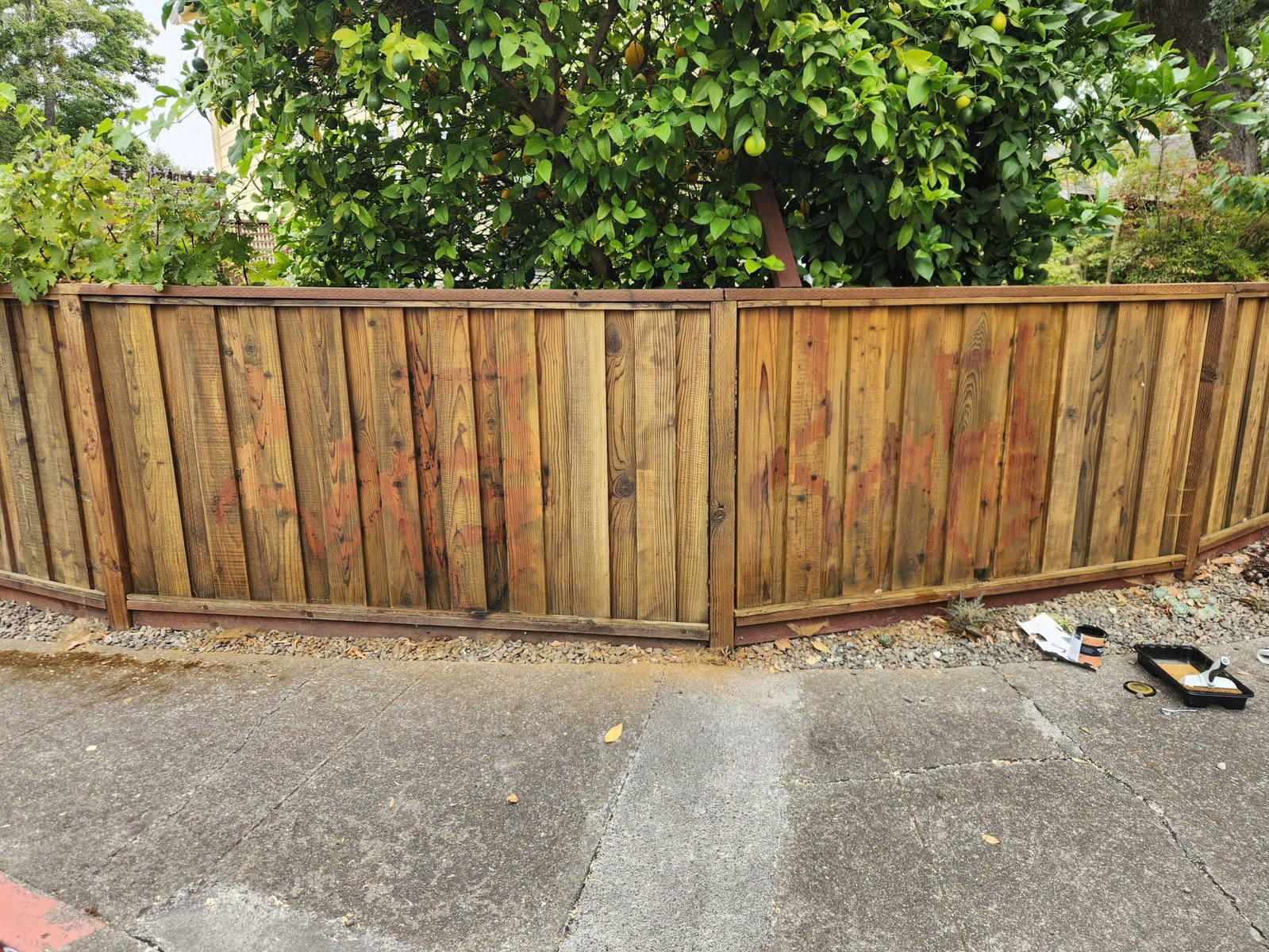
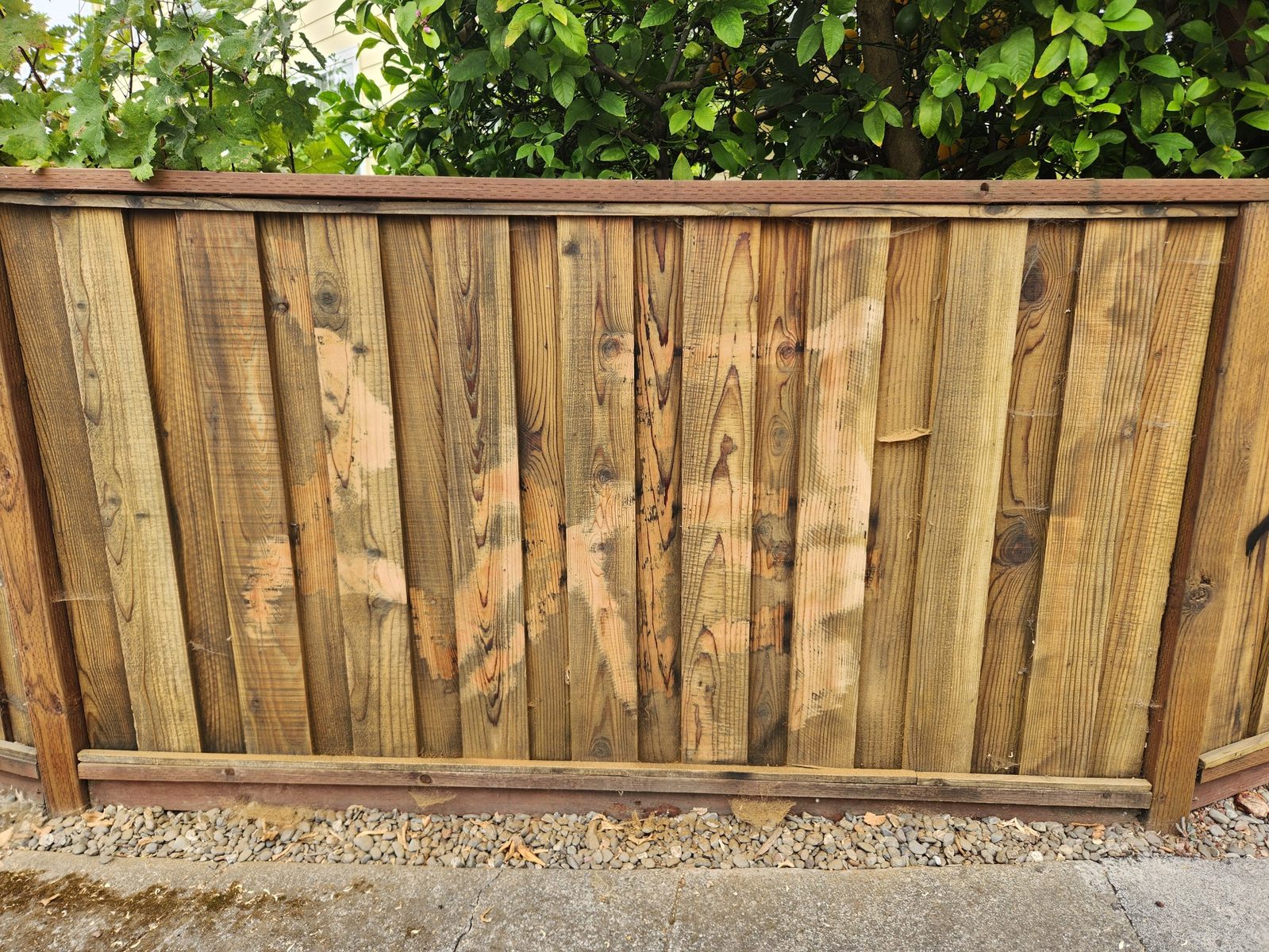
By the time the stain cured, the tagged sections were indistinguishable from the rest of the fence line — no obvious patch, no mismatched lumber, no sign a fence post had ever been hit.
What Fence Graffiti Removal Costs
Pricing depends on how much surface is tagged and how deep the paint has set in:
| Job | Typical Range |
|---|---|
| Wood fence graffiti removal (sanding + spot-stain match) | $150–$400 |
| Stone, brick & concrete graffiti removal | $100–$350 |
| Painted surface graffiti removal (spot-prime + repaint) | $150–$450 |
Most jobs are quoted flat-fee from a couple of photos, and same-day or next-day response is common — fresh paint sands out easier than paint that's had weeks to cure. See the graffiti removal page for the full breakdown by surface type.
Frequently Asked Questions
Can graffiti be removed from a wood fence without replacing the panel?
In most cases, yes. Spray paint sits on the surface of the wood grain rather than soaking all the way through, so sanding it down and spot-staining to match the surrounding wood usually restores the section without a full panel swap.
Will the stained section stand out from the rest of the fence?
Not if it's matched correctly. The goal is blending the repaired section into the surrounding, already-weathered wood rather than using a fresh, uniform stain color that stands out as an obvious patch.
How fast can graffiti be removed before it sets in permanently?
Same-day or next-day response is common. Fresh spray paint sands out easier than paint that's had weeks to cure and weather into the wood grain, which usually means a faster, cheaper job.
How much does fence graffiti removal cost?
Wood fence graffiti removal, including sanding and spot-staining to blend the repair back in, typically runs $150–$400 depending on how much surface is tagged. Most jobs are quoted flat-fee from a couple of photos.
The Bottom Line
A graffiti hit on a wood fence looks worse than it usually is. Sand the paint out of the grain, match the stain to the weathering already on the fence, and the tag is gone without tearing out a single board. Replacement has its place, but it's the exception here, not the default.