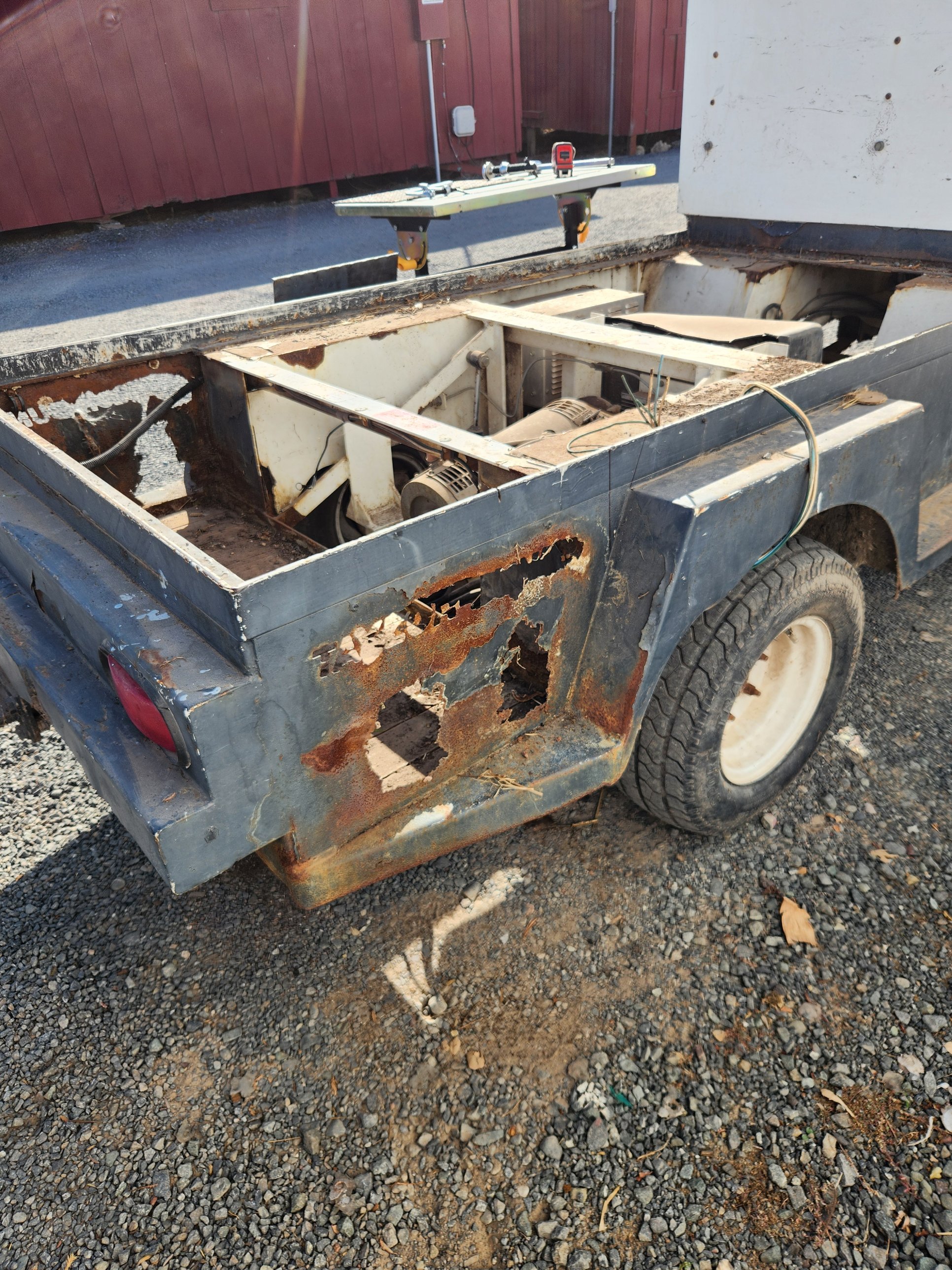
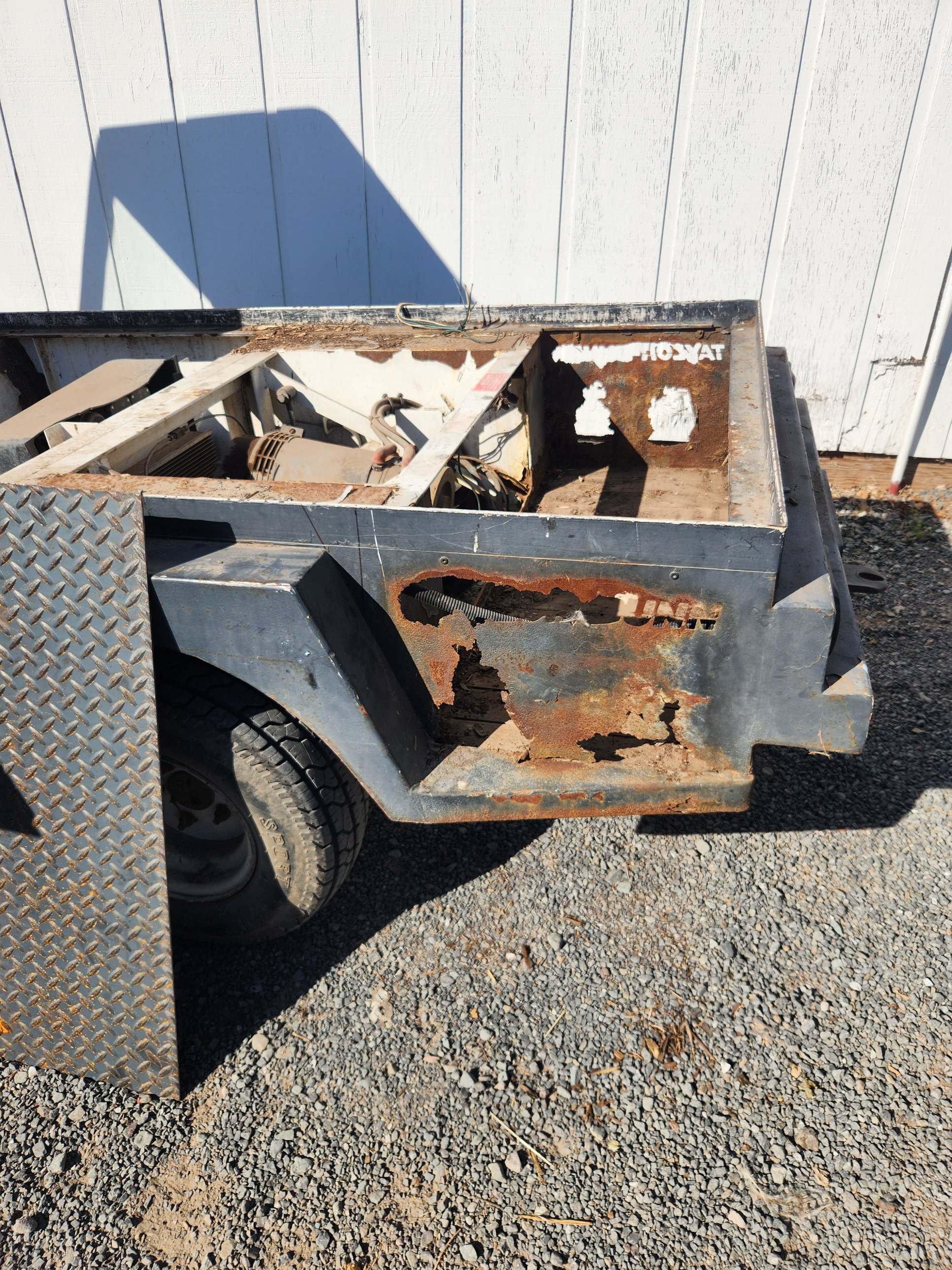
A Petaluma property maintenance company reached out about their work cart's battery compartment — years of moisture and battery exposure had rusted the lower panels down to paper-thin, rotted-out steel. The holes had grown large enough that the crew was worried the batteries would shift or drop straight through during normal use. Rather than replace the cart or send it to a specialty golf cart shop, Chad cut out the rusted sections and welded in new steel plate on-site, securing the batteries back in place.
Why Weld In New Steel Instead of Replacing the Cart
Battery compartments on golf carts and utility work carts are some of the first areas to rust through — they trap moisture and battery off-gassing against bare steel, often with little to no drainage, and most carts spend their life parked outside. By the time a client notices holes, the compartment usually isn't holding the batteries securely anymore. A full cart replacement or a factory bed swap is expensive and often unnecessary: when the surrounding frame is still structurally sound, as it was here, cutting out the rotted sections and welding in new plate steel restores the compartment at a fraction of the cost.
How the Repair Went — Step by Step
Assess the rust damage
Both sides of the battery compartment were checked for how far the rust had spread and whether the surrounding frame was still structurally sound enough to weld to.
Cut out the rotted steel
The thinned, rusted-through panel sections were cut back to solid metal, clearing away anything too compromised to weld onto.
Fit new diamond-plate steel
New diamond-plate steel was cut and test-fit against the opening to match the original panel's shape before any welding started.
Weld the new panel in place
The new steel was welded in along every edge, sealing the compartment back up and giving the batteries a solid floor and wall to sit against again.
Check the fit and seal
Once welded, the panel was checked for a tight, secure fit — no gaps for batteries to shift through and no sharp edges left exposed.
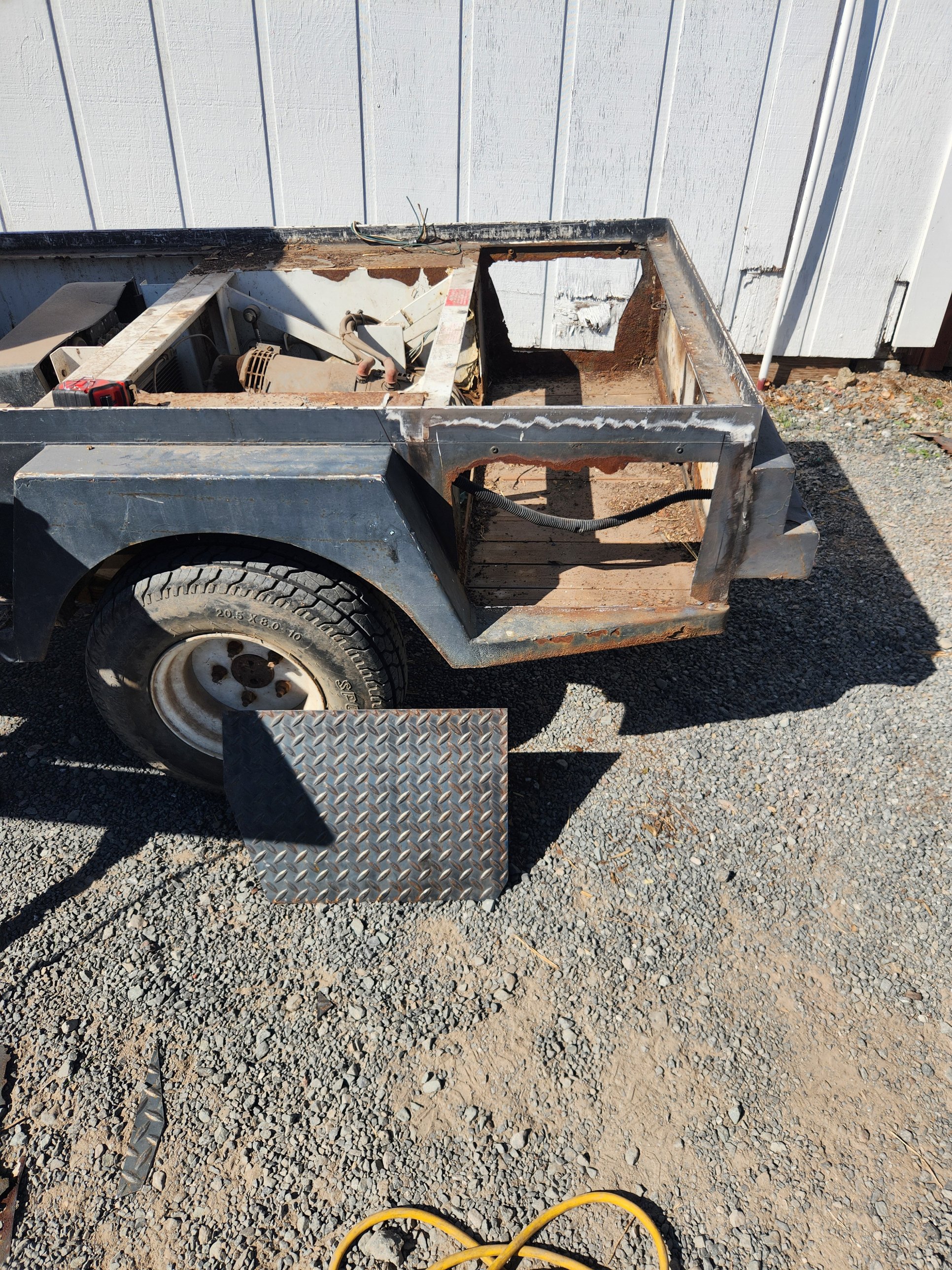
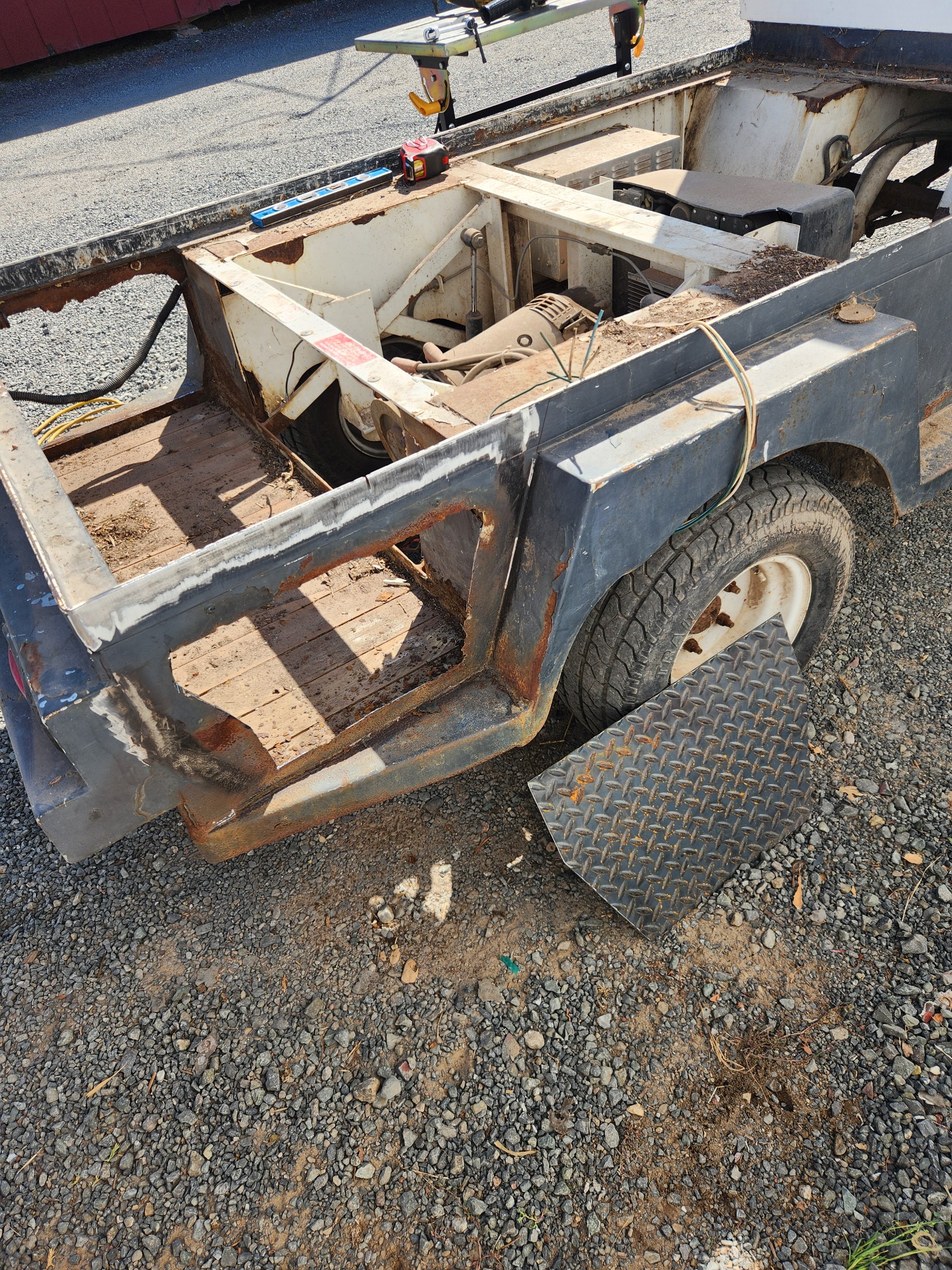
With the rotted sections cut back to solid metal, new steel was welded in along every edge — sealing the compartment back up and giving the batteries a solid floor and wall to sit against again.
The Finished Repair
A walkaround of the finished repair — the diamond-plate panel welded back into place, flush with the surrounding steel.
The compartment went from rusted-through and unsafe to a solid steel enclosure again — the batteries are secure, and the cart went back into service without the cost of a replacement.
What Cart Rust Repair & Welding Costs
Pricing depends on how many panels need replacing and how accessible the damage is to weld:
| Job | Typical Range |
|---|---|
| Single panel cut-out and weld repair | $150–$400 |
| Multi-panel or full compartment rebuild | Quoted per cart from photos |
| Fleet / multi-cart jobs (property management, landscaping) | Bundled rate, quoted per fleet |
Most jobs are quoted flat-fee from a couple of photos. See the mobile welding page for the full range of on-site metal repair work.
Frequently Asked Questions
Can a rusted-out golf cart or utility cart bed be repaired instead of replaced?
Yes, in most cases. Rust damage on a cart bed or battery compartment is usually isolated to the lower, moisture-exposed panels. Cutting out the rotted steel and welding in new plate restores the structure at a fraction of the cost of a new cart or a factory replacement bed.
Why do golf cart and utility cart battery compartments rust out?
Battery compartments trap moisture and battery off-gassing against bare steel, often with little to no drainage. Combined with outdoor storage, the lower panels around the battery tray are usually the first part of the cart to rust through.
Is it dangerous if a cart's battery compartment is rusted through?
Yes, it can be. Heavy batteries sitting on a rotted-out floor or panel can shift or fall through during normal driving, which risks damaged terminals, acid exposure, or a dropped battery pinning someone's foot. A rusted compartment that no longer securely holds the batteries should be repaired before the cart goes back into regular use.
How much does cart rust repair and welding cost?
Cutting out rusted panel sections and welding in new steel typically runs $150–$400 per cart depending on how many panels need replacing and how accessible the damage is. Fleet and multi-cart jobs for property management and landscaping companies are quoted per cart with a bundled rate.
The Bottom Line
A rusted-through battery compartment doesn't mean the cart is done. Cut out what's rotted, weld in solid steel, and the batteries are secure again — this one went from a safety concern to back-in-service in a single mobile welding visit.