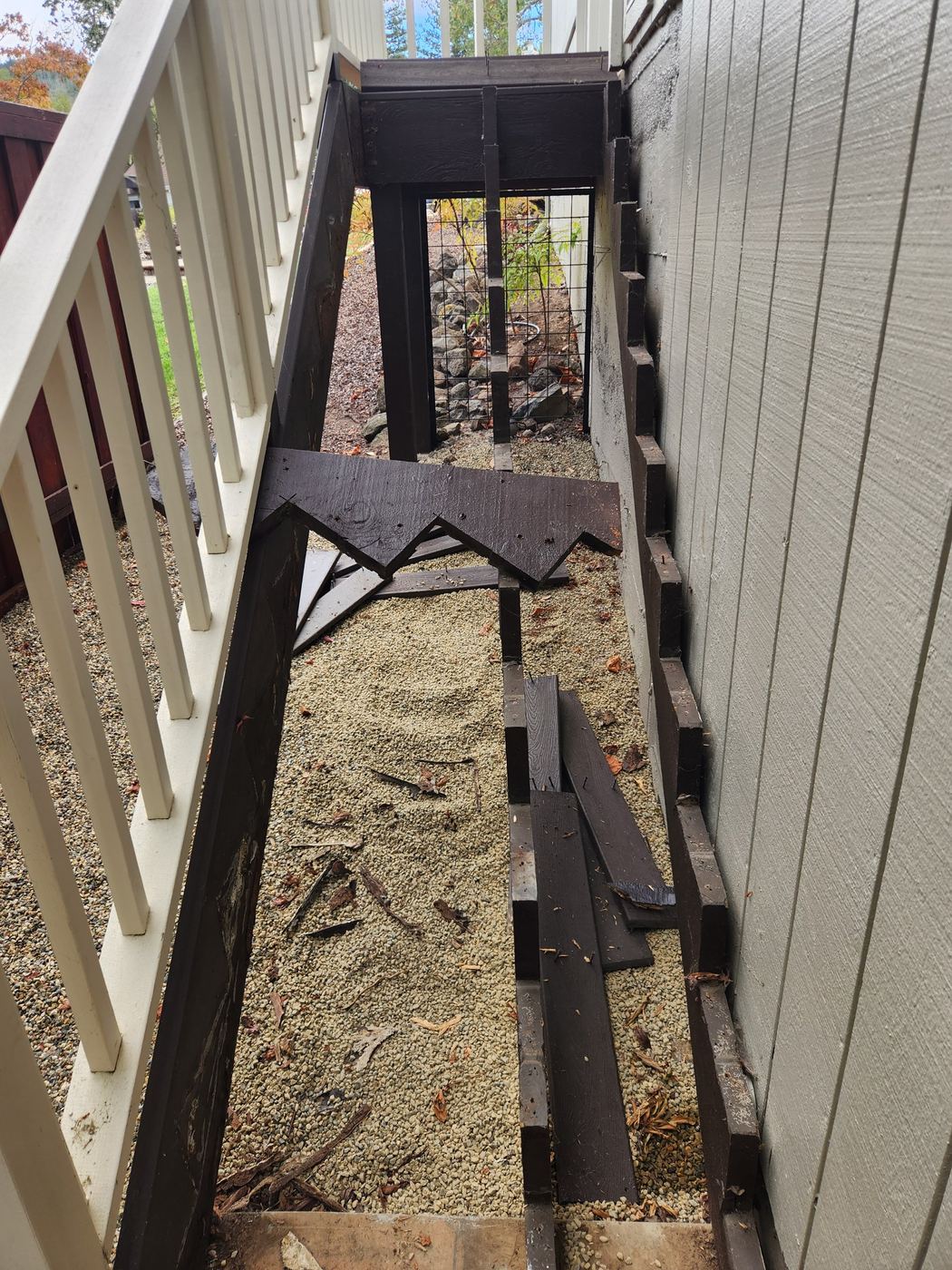
This one's a project spotlight from an exterior stairway repair here in Santa Rosa — wood rot on exterior stairs and decks is one of the most common repair calls we get across Santa Rosa and Sonoma County. Years of weather exposure had rotted out one of the stair stringers — the diagonal support board the treads actually sit on. Here's how a stringer replacement like this actually goes, from spotting the rot to closing it back up with a few details that help it last longer than the original.
Why This Stringer Had to Be Replaced, Not Patched
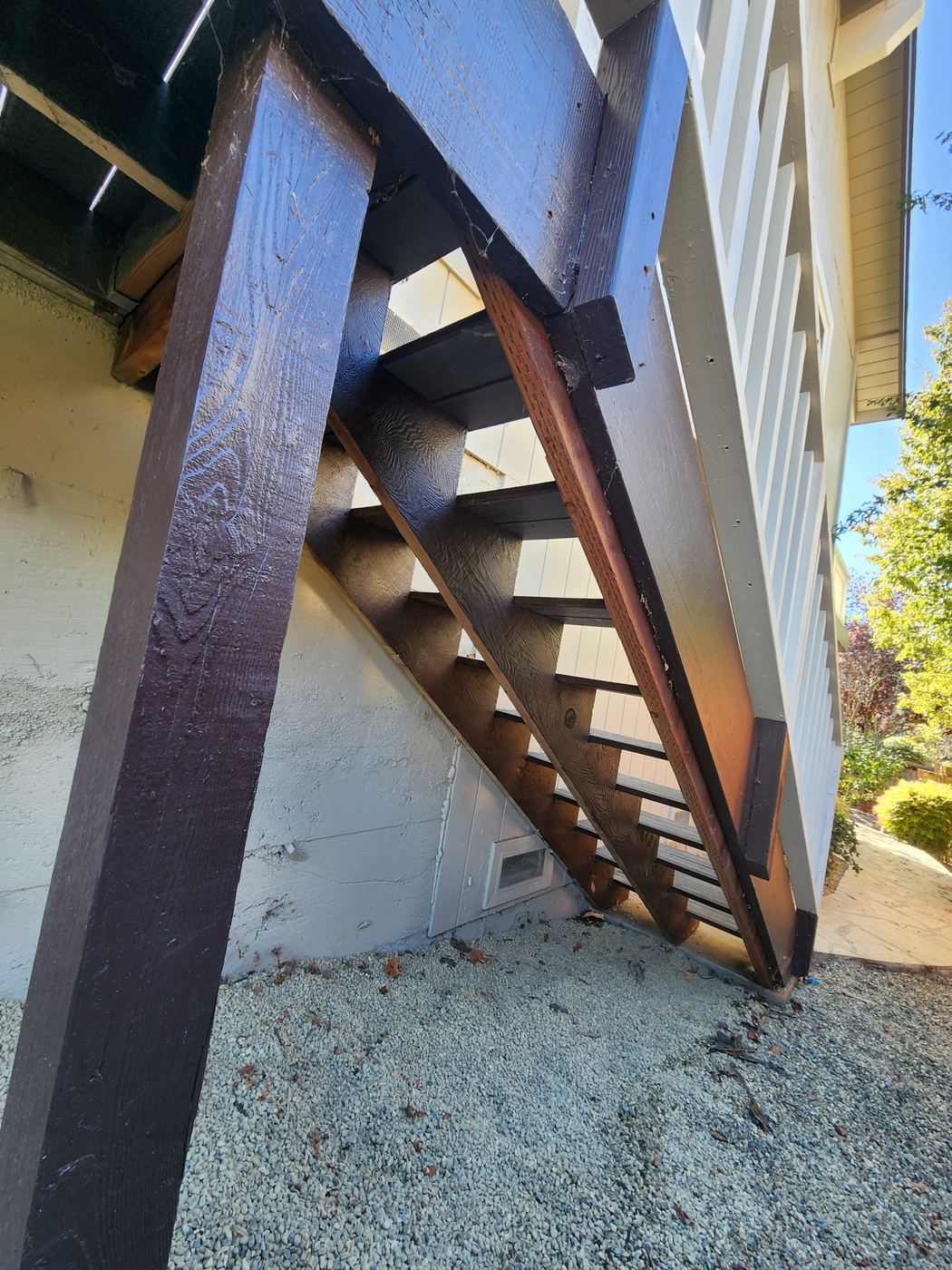
A stair stringer carries the entire load of the staircase — every tread, every footstep. Once wood rot sets into a structural member like that, there's no patching it back to strength; the damaged run has to be cut out and replaced with new material. This stairway sits tight against the side of the house with limited airflow and sun exposure, which is exactly the kind of spot where moisture sits on wood longer than it should and rot gets a foothold.
The fix isn't just swapping in a new board, either — it's addressing why the original one rotted, so the replacement doesn't fail the same way in a few years.
How the Repair Went — Step by Step
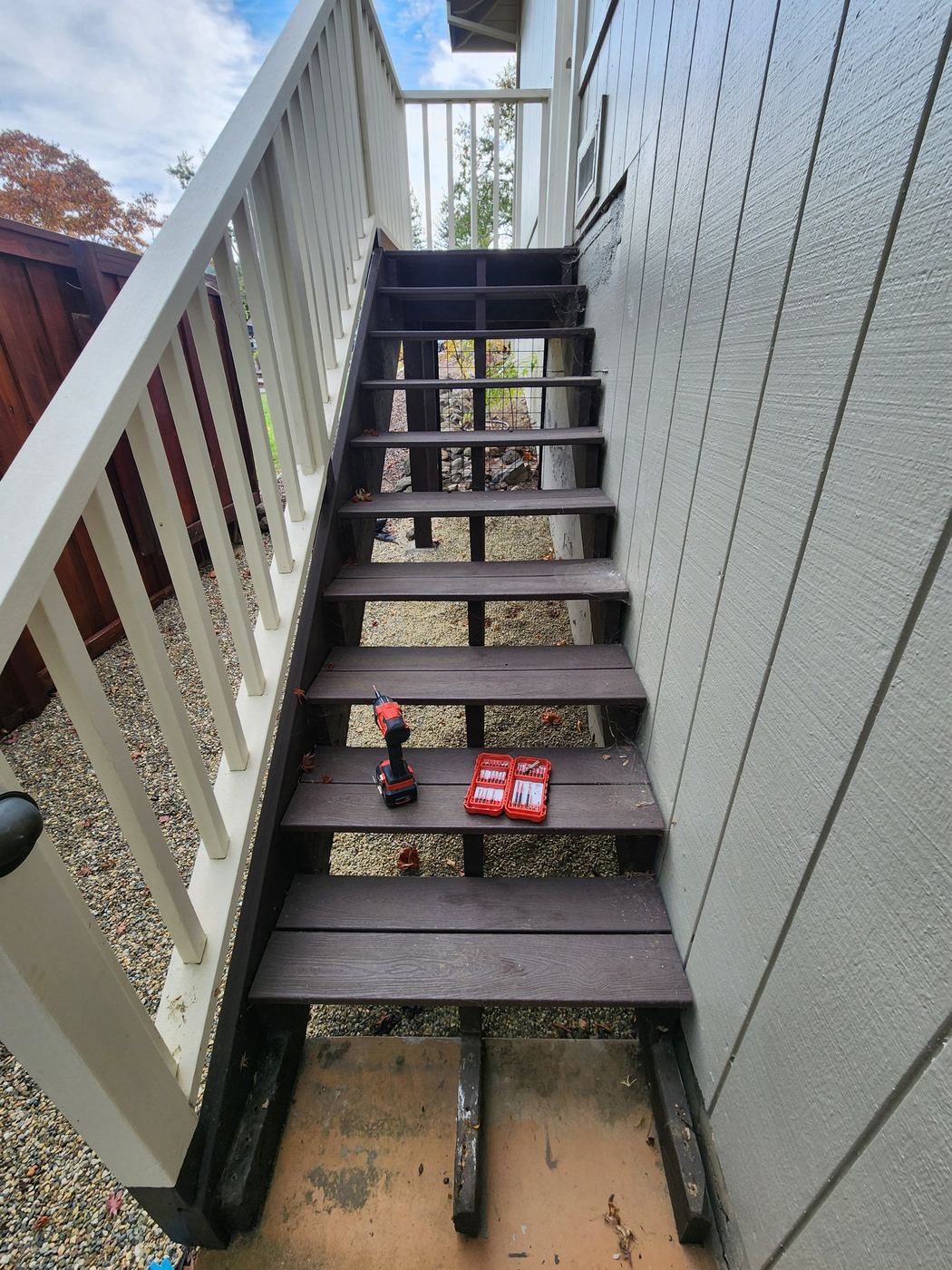
Inspect and stage the job
Before pulling anything apart, the stairway was inspected tread by tread to confirm which stringer had failed and how far the rot extended. Tools got staged on the existing treads so the demo could start clean.
Remove decking and expose the stringer
Treads and skirt boards came off to expose the full run of the damaged stringer, confirming the rot was isolated to that one structural member rather than spreading further into the framing.
Cut out and clear the damaged section
The rotted stringer was fully removed, along with the old fasteners and any soft wood nearby, leaving a clean opening to work with.
Fabricate and treat the new stringer
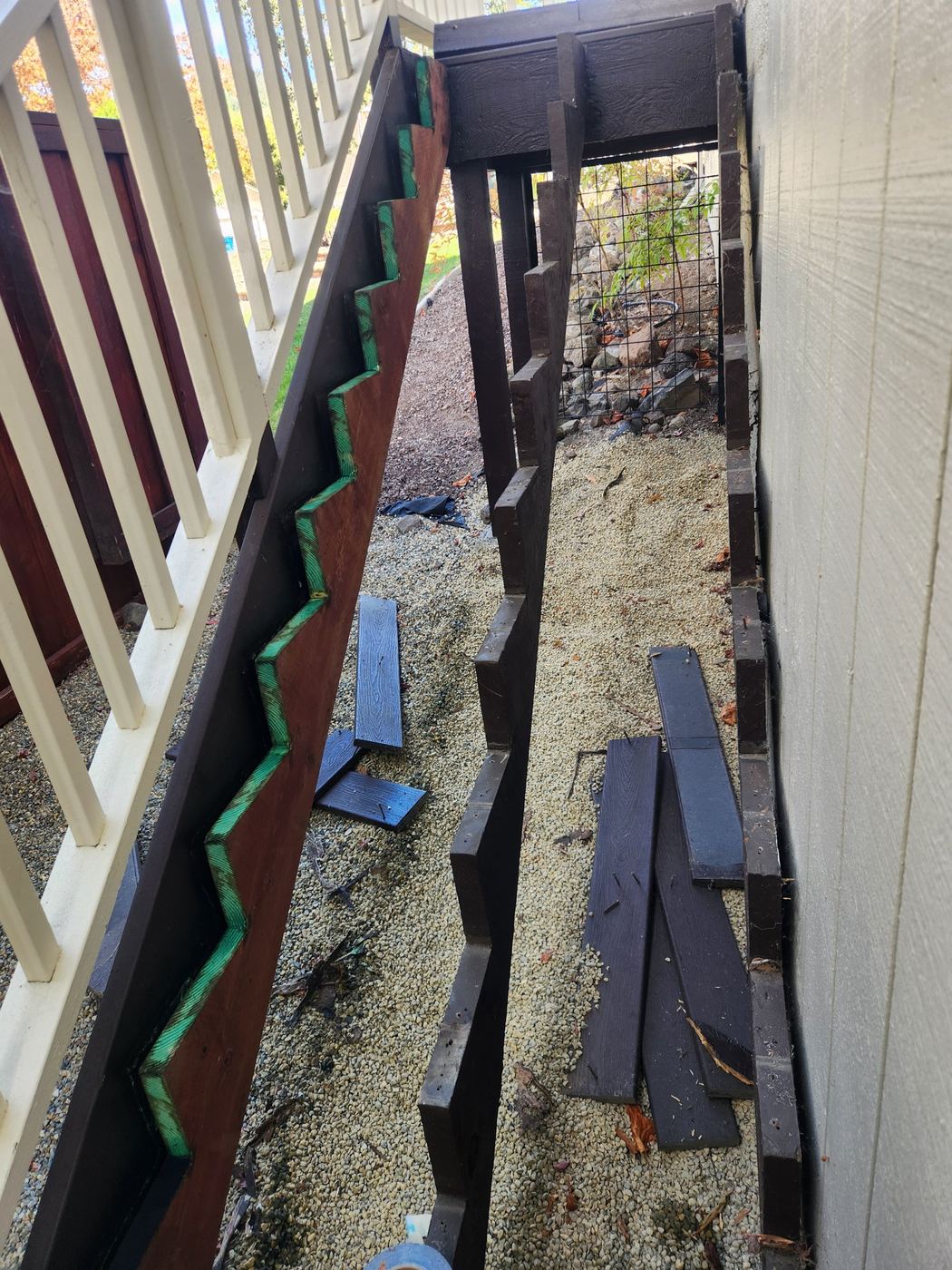
A pressure-treated 2x12x12 was cut to fit — a pre-cut stair stringer wasn't in stock, so this one was laid out and cut to match the original rise-and-run pattern by hand. Every fresh cut edge got sprayed with a copper-based wood preservative, since pressure treatment only penetrates the outside of a board at the mill — any on-site cut exposes untreated wood that needs its own protection.
Add moisture protection before it goes back together
Self-adhesive moisture (flashing) tape went down along the top edge of the new stringer before any boards were attached, so water can't soak into the fastener holes and end grain where the treads sit. Spacers were also added between the outer skirt board and the stringer, leaving a gap for water to drain through instead of getting trapped between the two boards — one of the most common places these stairs rot out in the first place.
Reinstall decking and railing
With the new stringer set, treated, and taped, the treads and railing went back on and the stairway was checked for level and solid footing before calling it done.
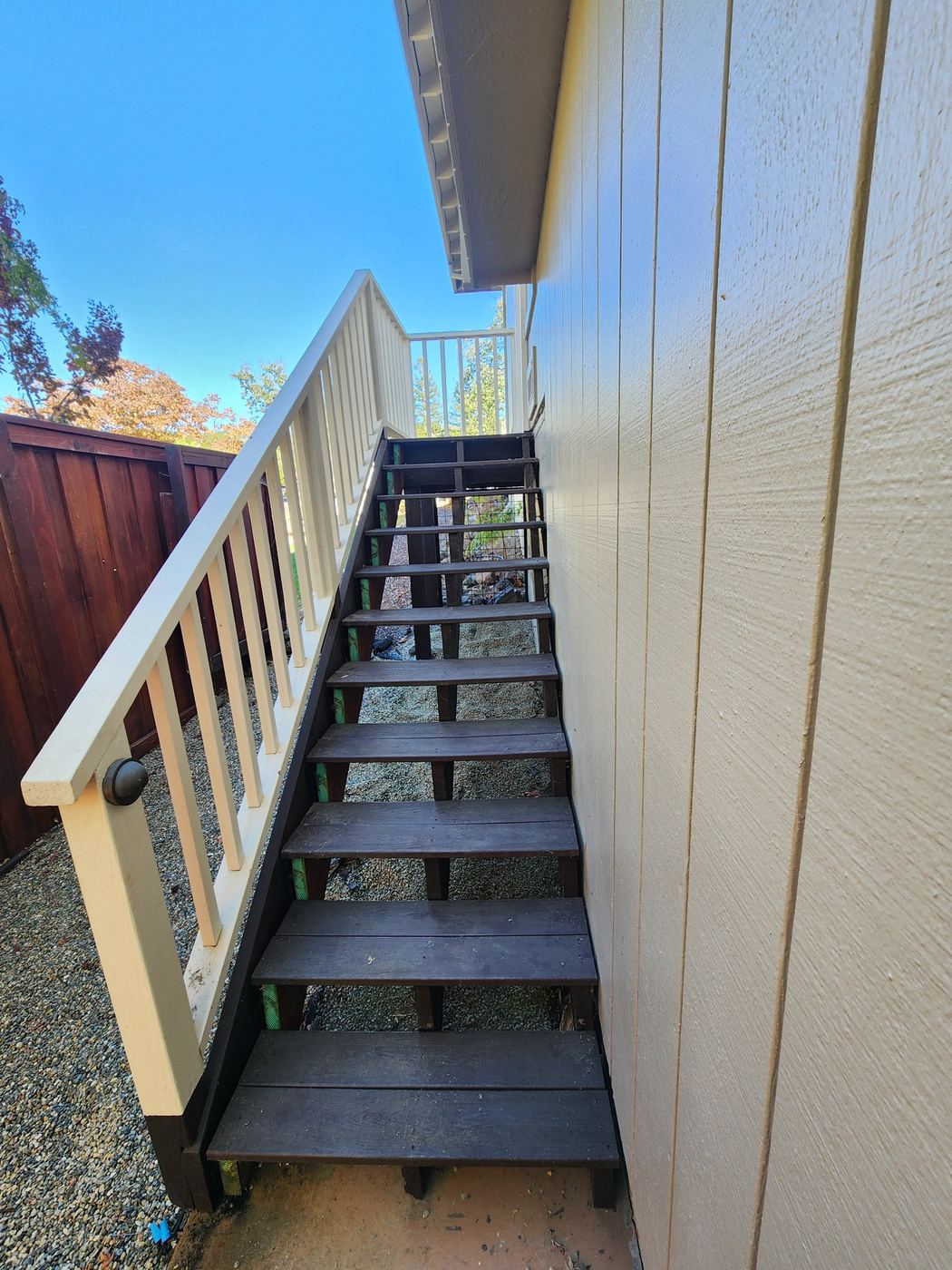
Details That Make a Stringer Repair Actually Last
Swapping in a new board is the easy part. What determines whether it rots out again in five years comes down to a few details that are easy to skip:
- Pressure-treated lumber: stands up to repeated wetting far better than untreated stock — the right baseline material for anything exposed outdoors.
- Copper preservative on cut ends: restores rot protection at every on-site cut, since factory pressure treatment doesn't reach wood exposed after the board is trimmed to size.
- Moisture tape on the stringer: keeps water from soaking into the fastener holes and end grain where the treads attach — a common early failure point even on treated lumber.
- Drainage spacers: a small gap between the skirt board and the stringer lets water fall through and evaporate instead of sitting trapped between two boards, which is often exactly how the original rot started.
What Stair Stringer Repair Costs
Pricing depends on stair height, number of treads, and how much of the surrounding structure needs to come apart to get at the stringer, but here's a realistic range for this kind of repair in Sonoma County in 2026:
| Job | Typical Range |
|---|---|
| Single stringer replacement (treads reused) | $450–$900 |
| Single stringer replacement (treads/risers also replaced) | $650–$1,200 |
| Minor rot repair, no structural replacement needed | $150–$350 |
A full staircase rebuild with multiple stringers, or any rot found spreading into the ledger board or house framing, is a bigger scope and may call for a licensed contractor rather than handyman repair — Chad will flag that upfront rather than start a job that's outside handyman scope.
Frequently Asked Questions
How do you know if a stair stringer needs to be replaced instead of repaired?
Once wood rot has softened or crumbled a section of the stringer — especially near the base or wherever water collects — patching it is not a structural fix. A stringer carries the full load of the stairs, so if a screwdriver sinks into the wood or a section flakes apart, the damaged run needs to be cut out and replaced with new material, not filled or sistered over rot.
Why use pressure-treated lumber for a stair stringer?
Pressure-treated lumber resists rot far longer than untreated wood when it's exposed to weather, ground contact, or repeated wetting, which is exactly the environment most exterior stair stringers sit in. It's the standard material for any outdoor structural wood that can't be fully protected from moisture.
What is moisture tape and why add it to a new stringer?
Moisture (flashing) tape is a self-adhesive waterproof membrane applied to the top edge of a stringer or joist before boards are attached. It stops water from soaking into the end grain and screw holes where boards are fastened down — one of the most common spots rot starts, even on pressure-treated lumber.
Why treat the cut ends of pressure-treated lumber?
Pressure treatment only fully penetrates the outer layer of a board at the mill. Any cut made on-site exposes untreated wood at that edge. A copper-based wood preservative spray applied to every fresh cut restores that protection, so the cut end doesn't become the first place the new stringer rots.
How much does stair stringer replacement cost in Santa Rosa?
A single stringer replacement on an existing exterior stair — removing the rotted section, fabricating and installing new pressure-treated stock, and reattaching treads — typically runs $450–$900 depending on stair height, number of treads, and whether the treads and risers are reused or replaced. A full staircase rebuild with multiple stringers costs more and may fall outside handyman scope.
The Bottom Line
Rotted stair stringers are a structural repair, not a cosmetic one — but a repair done right, with pressure-treated lumber, moisture tape, drainage spacing, and treated cut ends, should outlast the original by a good margin. If a set of stairs feels soft, springy, or shows visible rot at the base, it's worth having it looked at before it gets worse.